Why Supercars Launch So Hard

Tessa
| 04-11-2026
 · Automobile team
Hi, everyone. You floor a supercar and the whole thing goes flat and immediate, no drama, no wheelspin, just forward.
It looks simple from the outside. It is not. A 700 hp engine on its own gets you nowhere if the tires cannot put that force down, and that is where most of the real engineering lives.
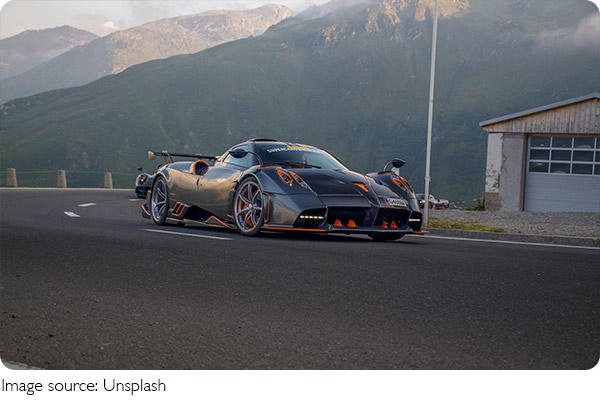
Traction is the whole game
Rear-wheel-drive supercars fight a simple problem: the harder you push, the easier the tires break loose. All-wheel-drive cars solve it directly by sending torque to the front axle too. The Lamborghini Huracan and the Porsche 911 Turbo both lean on AWD for exactly this reason, and it shows in their 0 to 60 times, both landing around 2.5 to 2.9 seconds depending on the version. More driven wheels means more of the engine's output actually reaches the road instead of turning into tire vapor.
Launch control does the thinking
Modern supercars hand the hard part to a computer. Ferrari's launch control, and the equivalent systems in a McLaren 720S, manage clutch engagement and engine rpm together so the car leaves the line at the edge of grip without crossing it. You hold the brake, press the button, floor the throttle, release. The car modulates everything in milliseconds. A human foot cannot react that fast, and that gap is worth a few tenths off every launch.

Weight sits where it helps
Where the mass sits matters as much as how much there is. Mid-engine cars like the Ferrari 488 put the engine behind the driver, which pushes weight onto the rear tires that need to grip under acceleration. That layout is a big reason mid-engine supercars can run shorter gearing and still hook up. A front-engine car has to work harder to keep the rear planted, which is why some of them run wider rear tires or more aggressive traction software.
Gearing multiplies everything
A supercar's gearbox is built to keep the engine in its power band. Short first and second gears turn engine torque into strong wheel torque right off the line, and dual-clutch transmissions shift in roughly 50 milliseconds or less. That near-instant shift means no wasted time between gears, and on a car like the Bugatti Chiron the seven-speed dual-clutch is tuned specifically to deliver that uninterrupted pull.
Aero and tires finish the job
Sticky tires are the quiet hero. Michelin Pilot Sport Cup 2 rubber, common on track-focused supercars, offers noticeably more grip than a standard street tire, and that alone can cut launch times. Add active aero that presses the car down as speed builds, and the faster you go, the more grip you get. It is a rare case where going quicker makes going quicker easier.
The short version: a supercar accelerates hard because the engine, the drivetrain, the tires, and the software all aim at the same goal, putting force into the ground without losing it. Next time you watch a launch video, look at how still the car stays, that calm is the engineering working.