When to Change Engine Oil

Mei
| 10-11-2026
 · Automobile team
You've probably been told to change your oil every 3,000 miles, full stop.
But that number is outdated, and treating it as law can cost you money or, in the other direction, cost you an engine. Here's how to actually read the signs.
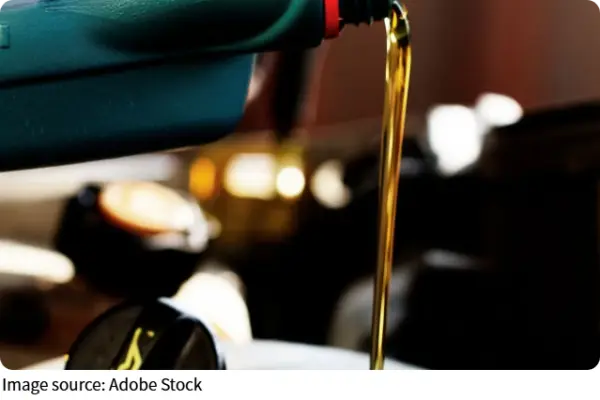
Check the dipstick, not the calendar
Most modern cars running full synthetic can go 7,500 to 10,000 miles between changes, and some manufacturers spec intervals past that. Your owner's manual is the real authority here, not the reminder sticker a quick-oil-change shop slaps on your windshield.
Pull the dipstick when the engine is cold and the car is parked on level ground. If the oil sits below the lower mark, you're either due for a change or burning oil faster than you should be. Top off with the grade listed on the oil cap, usually something like 0W-20 on a late-model sedan.
Read the color honestly
Fresh oil is amber and translucent. After a few thousand miles it turns dark brown, and that's normal, since it's holding contaminants in suspension. What you're watching for is black and gritty, or a milky, coffee-with-cream look.
Milky oil usually means coolant is mixing in, often from a failing head gasket, and that calls for a mechanic, not an oil change. Rub a drop between your fingers. If it feels thin and watery rather than slick, it's done its job.
Short trips are the quiet culprit
A 10-minute drive to the grocery store never lets the engine reach full operating temperature. Moisture builds up in the crankcase and doesn't boil off, and fuel dilution thins the oil over time.
If most of your driving is sub-15-minute hops, change it closer to the severe-service interval in your manual, often 5,000 miles instead of 10,000. Highway commuters get the longer end of that range.
Watch the level between changes
Check it once a month, or every other fill-up. A car that drops half a quart over 1,000 miles is telling you something, whether that's a worn valve cover gasket or just an older engine that's always done it. Keep a quart of the right grade in the trunk and you'll never get caught low on a road trip.
Let the oil monitor be your backup
The oil life monitor on most cars since the mid-2000s counts engine starts, temperature cycles, and mileage, then does the math for you. Trust it, but verify with the dipstick. It can't smell burnt oil or spot a slow leak. The oil pressure light is different: if it flickers, stop driving.
Next time a sticker nudges you toward a 3,000-mile habit, check the interval in your owner's manual and pull the dipstick before you book the change. If most of your trips are short hops, plan on the severe-service interval instead.