Living Forest Archives

Pardeep Singh
| 12-11-2026
 · Travel team
Hey Lykkers, have you ever stood at the base of a tree that was already ancient when the Roman Empire was young? There is something deeply humbling about walking through a forest that has outlived civilizations and watched continents shift. These are not just clusters of trees; they are living archives.
Here are six ancient forests worth traveling for, with the practical details you need to plan a visit.
Białowieża Forest, Poland and Belarus
This is the last primeval lowland forest in Europe, a remnant of the vast woodland that once covered the continent. It covers around 1,418 square kilometers and is UNESCO-protected.
The star attraction is the wild European bovine population, with at least 800 living here, alongside the 600-year-old "oak patriarch." The Strict Reserve can only be explored with a licensed guide, which costs roughly US$2 for entrance plus US$15 for the guide fee per person. The public glade loops near the wildlife reserve are free and offer a chance to see these massive animals at dusk. The forest is about 3.5 hours from Warsaw, and ticks are a real nuisance from April to October, so tuck your pants into your socks.
Daintree Rainforest, Australia
This is the oldest tropical rainforest on Earth, estimated at 180 million years old. It is also the only place where a tropical rainforest meets the Great Barrier Reef, making it a dual World Heritage site. The Daintree is home to primitive plant species that trace back to the age of dinosaurs. You can take a crocodile cruise on the river, walk the Mossman Gorge, or learn about the forest from Kuku Yalanji guides who have called this place home for tens of thousands of years. A full-day tour from Cairns, including hotel transfers and a crocodile cruise, costs around US$160 for adults. The best time to visit is during the dry season, roughly May to October.
Waipoua Forest, New Zealand
This forest on the North Island is home to the largest and oldest kauri trees in the country, living relics from the Jurassic era. The most famous tree is Tāne Mahuta, the "King of the Forest," standing 51 meters tall and more than four meters wide, estimated to be over 2,000 years old. Another giant, Te Matua Ngahere, is estimated to be between 2,500 and 3,000 years old. Entry to the forest is free, and the track to Tāne Mahuta is flat and easy, taking about 10 minutes round trip. Guided twilight tours with Māori guides are available for around US$60–80 per person if you want to experience the forest's spiritual side.
Yakushima Forest, Japan
This island off southern Japan feels like stepping into a Studio Ghibli film. The moss-covered ancient cedars and misty atmosphere inspired Princess Mononoke. The oldest tree, the Jōmon Sugi, is believed to be over 7,000 years old. The hike to see it is a serious undertaking: roughly 22 kilometers round trip, taking about 9 to 10 hours. You view the tree from a platform about 50 meters away to protect it, but the journey through the primordial forest is the real reward. For a shorter option, the Shiratani Unsuikyo Ravine offers easier trails through the same magical scenery. Getting there involves a ferry from Kagoshima, typically costing around US$30–40 return.
Ancient Bristlecone Pine Forest, USA
These are the oldest individual trees on the planet. At least two trees in this forest in eastern California are known to be more than 4,800 years old. The bristlecone pines grow in harsh, high-altitude conditions, and their twisted, gnarled branches create a surreal scene against the desert rock and bright sky. The trees are left unmarked to protect them from vandals, so you will not find signs pointing to the oldest ones. The forest is accessible via a scenic drive, and there is no entry fee. It is a quiet, contemplative place, best visited in summer and early autumn when the roads are clear.
Ancient Bristlecone Pine Forest
Sequoia National Park, USA
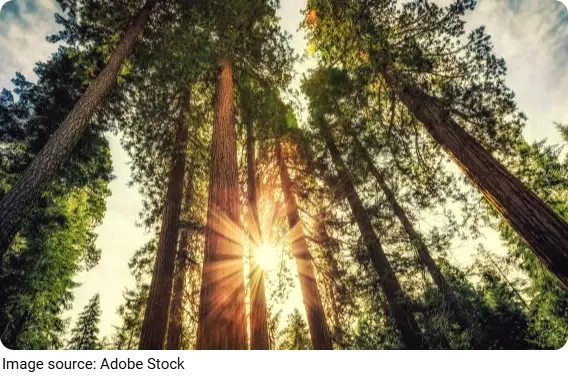
This is where you find the biggest trees in the world. The General Sherman Tree stands 83 meters tall with an 11-meter-wide base, and the sequoias here can live for 3,000 years. The park covers over 1,600 square kilometers in southern California, and the scale of the trees is genuinely hard to process until you are standing beneath one. The park is easily accessible by car, and there are trails for all fitness levels. Sequoia National Park charges a standard US$35 per vehicle entrance fee. The best time to visit is late spring through early autumn, when the trails are clear and the weather is mild.
Final Thoughts
These forests are not just destinations. They are reminders of how small our own timelines really are. Whether you are hiking to a 7,000-year-old cedar in Japan or watching massive herds graze in a Polish woodland, the experience is less about ticking off a list and more about standing still for a moment. Go slowly, follow the rules, and leave no trace. These places have survived for millions of years. The least we can do is visit with respect.