Solo in Rural Italy

Sophie
| 13-11-2026
 · Travel team
Hello, Lykkers! Picture this: you step off a bus in a small Italian hill town, and the loudest sound is your own footsteps on cobblestone. The countryside here is calm, green, and deeply rewarding—but it also asks a little more planning from a solo traveler than a city break does.
The good news is that rural Italy is generally safe for people traveling alone, provided you prepare for transport gaps, limited opening hours, and the simple fact that you will be your own company for most of the day. This guide helps you make real decisions, from choosing a base to budgeting your days, with five places worth building a trip around.
Safety and the Solo Reality
Small towns and rural areas in Italy often feel safer than busy cities in terms of street crime. The bigger risks are practical: long waits between buses, roads without sidewalks, and getting stranded after dark because you missed the last connection.
If you plan to walk or hike, tell your accommodation host where you are going and when you expect to return. Carry a small first-aid kit, which costs under $10 at any pharmacy, and keep your phone charged, since mobile signal can be patchy in valleys and hills. A simple habit that helps: arrive in daylight, especially if your lodging sits at the end of an unpaved lane.
Getting Around Without a Car
A car gives you freedom in the countryside, but it is not mandatory everywhere. The key is choosing a base with real connections. Siena works well as a car-free hub: buses run to San Gimignano and to Val d'Orcia towns such as Pienza and Montepulciano, though schedules are thinner on Sundays and holidays. For Val d'Orcia, the bus from Siena threads through San Quirico d'Orcia and Pienza, but there are only a handful of usable departures a day—plan your return like a flight and treat the second-to-last bus as your last. If you want to see the famous photo spots between towns, consider a small-group day tour or a single rental day rather than relying on public transport for every stop.
Five Places Worth Your Time
Siena is the ideal first city for a solo countryside trip: walkable, safe, and packed with medieval character. Start at Piazza del Campo, climb Torre del Mangia for views over the hills (entry around $10), and wander into the contrade neighborhoods away from the main square for quieter meals. Wear serious walking shoes; the streets are steep and cobblestoned.
Pienza is a Renaissance gem in Val d'Orcia and a UNESCO site. The historic center is small enough to explore on foot, with Piazza Pio II, the Cathedral, and the Palazzo Piccolomini garden offering views across the valley (garden entry roughly $5). It is also a practical base for bus connections to Montepulciano and Siena.
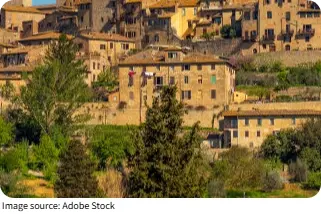
San Gimignano is reachable by bus from Siena in about an hour (ticket about $5), making it a realistic day trip without a car. The towers define the skyline, and the town center is compact enough to enjoy slowly rather than rushing through.
San Gimignano
Santo Stefano di Sessanio, in the Apennines, is a quieter choice for solo travelers who want stone lanes and mountain air. At around 1,250 meters, it sits within a national park and has been restored as a living village rather than a tourist shell. A local trail map costs a few dollars, and the reward is slow walking and good light for photos.
Montepulciano pairs well with Pienza on a Val d'Orcia day out. The town is built around a long, climbing street, so give yourself time and comfortable shoes. Bus connections from Siena are limited, so check the specific departure and return times before you commit; a ticket runs about $5.
Final Thoughts
Solo travel in rural Italy is not about proving you can handle anything alone. It is about choosing a sensible base, respecting the rhythm of small places, and giving yourself permission to move slowly. Start with Siena, add one or two hill towns, keep a cash buffer of around $50–$100 for the occasional taxi or tour, and let the gaps between buses become part of the trip rather than a problem to solve. The countryside is quiet, but it is not empty—and with a little preparation, it can be one of the most welcoming places you travel alone.