Lemon Meringue Tart

Elise
| 12-11-2026
 · Cate team
A lemon meringue tart looks simple on a bakery shelf, but it's one of the fussier desserts to make at home. The pastry can slump, the curd can stay runny, and the topping can start to bead with moisture.
The order matters more than speed. Give the shell time to bake through and the filling time to set, and the finished tart will have a crisp base, a sharp lemon filling, and a topping that holds its shape.
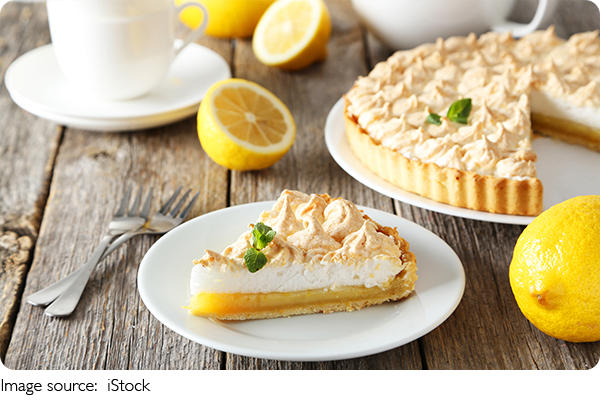
Ingredients
Keep the caster sugar for the filling and topping in separate bowls. For the pastry, curd, and meringue, you'll need:
- Pastry: 200 g plain flour
- Pastry: 100 g cold butter, cubed
- Pastry: 50 g icing sugar
- Pastry: 1 egg yolk
- Pastry: 1 tablespoon cold water
- Curd: 4 large pasteurised eggs
- Curd: 150 g caster sugar
- Curd: Zest of 3 lemons
- Curd: 120 ml fresh lemon juice
- Curd: 80 g butter, cut into pieces
- Meringue: 3 egg whites from pasteurised shell eggs, at room temperature
- Meringue: 150 g caster sugar
- Meringue: A pinch of cream of tartar
This makes one 9-inch tart.
Steps
According to Annabelle Shippee, a King Arthur Baking writer with a degree in baking and pastry arts, cream of tartar helps keep whipped egg whites from collapsing. Make the shell, filling, and topping in this order:
1. Make the shortcrust. Pulse the flour, icing sugar, and cold butter until the mixture resembles fine breadcrumbs. Add the yolk and cold water, then bring the dough together by hand.
2. Chill the dough for 30 minutes before rolling it out. Roll it to an even thickness, then ease it into a 9-inch tart pan with a removable base. Press the pastry into the corners without stretching it.
3. Bake the shell at 190°C. Poke the base with a fork and line it with baking parchment and baking beans. The beans hold the pastry down as it bakes. After 15 minutes, lift out the parchment and beans and bake for another 8 to 10 minutes, until the base is dry and pale gold.
4. Mix the curd. Whisk the whole eggs, caster sugar, lemon zest, and juice in a heatproof bowl, then add the butter. For a lime variation, use the same quantity of lime juice and add a little extra lime zest.
5. Cook the curd. Set the bowl over a pan of gently simmering water without letting the bowl touch the water. Stir constantly with a spatula, scraping the sides as you go. Start checking after 8 minutes: the curd is ready when it coats the spatula and a line drawn through it stays clear.
6. Fill the shell. Strain the curd through a sieve to catch the zest and any bits of cooked egg, then pour it into the warm shell. Let it cool, then chill for at least 2 hours before adding the topping.
7. Whip the meringue. In a clean bowl with no traces of yolk, whisk the egg whites and cream of tartar to soft peaks. Add the caster sugar a spoonful at a time, whisking between additions to help it dissolve. Keep whisking until the meringue is glossy and the peaks stand upright when you lift the whisk.
8. Top the tart. Spoon or pipe the meringue over the chilled curd, spreading it right to the pastry edge so no filling is exposed. Use the back of a spoon to lift the surface into peaks if you want more colour on the tips.
9. Brown the topping. Move a kitchen torch in short sweeps until the peaks are golden. If you don't have a torch, put the tart under a preheated grill and watch it continuously. Take it out as soon as the peaks are toasted, since the colour can deepen quickly.
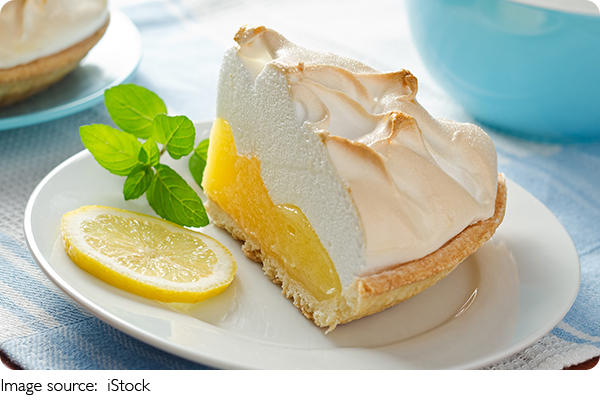
Serve the tart within a few hours for the crispest base. Refrigerate leftovers loosely covered so moisture doesn't collect against the topping.