Apple Nutrition

Nora
| 12-11-2026
 · Cate team
An apple is the snack that goes straight into a bag on the way out the door. It takes no cooking and is just as easy to eat at a desk as it is to pack with lunch.
How an apple is prepared changes what it offers. The peel and flesh contribute in different ways, and a glass of juice isn't nutritionally the same as the fruit it came from.
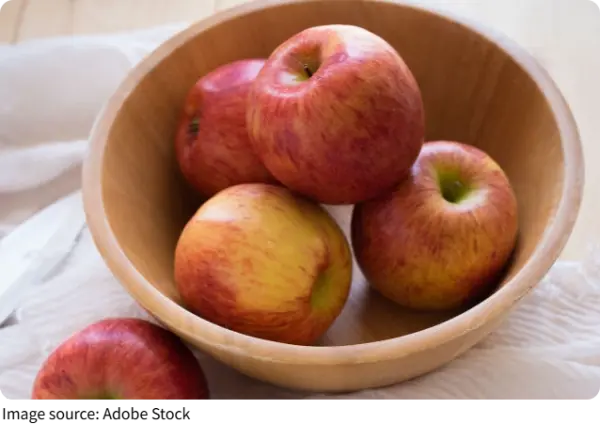
Fiber in the Flesh and Peel
A medium apple with the skin on gives you roughly 4 grams of fiber. According to Diane L. McKay, PhD, an assistant professor at Tufts University's Friedman School at the time of her interview with Tufts Health & Nutrition Letter, the flesh contains soluble fiber called pectin, while the skin supplies insoluble fiber.
Gut bacteria ferment pectin, using it as a food source. Insoluble fiber works differently: It adds bulk to stool and helps it move through the digestive tract. Peeling an apple removes some of the fiber but doesn't make the remaining fruit fiber-free. The flesh still has pectin.
How Much Vitamin C?
One medium apple delivers around 8 milligrams of vitamin C. That's a modest contribution, so don't treat an apple as your main source. Unlike the insoluble fiber concentrated in the peel, most of an apple's vitamin C is in the flesh. A peeled apple still provides vitamin C.
Medium is a reference size, not a guarantee that every apple contains the same amount. The USDA's reference values for raw apples with skin show more fiber and vitamin C in a large apple than in a small one. There's simply more fruit in the larger serving.
Whole Apples and Juice
Making clear apple juice involves separating the liquid from the peel and pulp and then filtering it. That leaves most of the fruit's fiber behind. The juice still contains the fruit's natural sugars, so the difference isn't that an apple has no sugar. It's what comes with the sugar.
If you're comparing the two, look at the fiber per serving rather than judging by calories alone. A serving of juice and a whole apple can look similar on calories and still provide different amounts of fiber. Blending an apple with its edible peel and pulp keeps those parts in the drink; filtering them out doesn't.
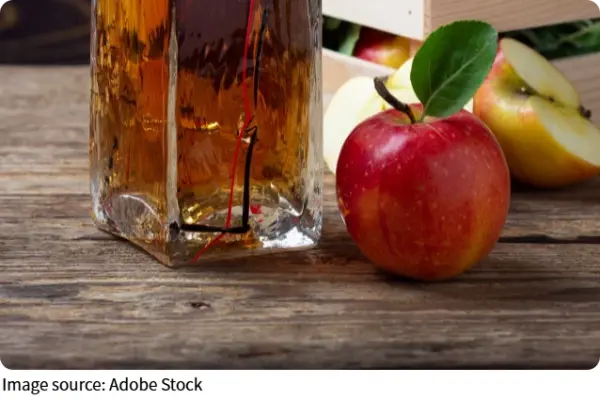
Polyphenols in the Peel
Apples contain polyphenols, a group of naturally occurring plant compounds. The peel is especially rich in them, and quercetin is one example. Some of these compounds also help give red apples their color, but color alone isn't a reliable guide to which variety contains more polyphenols.
Apple polyphenols have been studied in connection with heart health, but that doesn't make an apple a treatment or a substitute for a varied diet. They also explain a more familiar change: When a cut surface is exposed to air, these compounds react with oxygen and the flesh begins to brown.
Ways to Serve Apples
Slice an apple and serve it with a spoonful of peanut butter for dipping. If there's plain yogurt in the fridge, chop an apple into a bowl and add a sprinkle of cinnamon. The apple brings crunch to the yogurt, and the cinnamon works with either a tart or a sweet variety.
For a warm dessert, bake thick apple slices with a little cinnamon until they soften. The slices can be served on their own or spooned over plain yogurt. If the apple is going into a lunch bag instead, packing it whole keeps the flesh from browning before it's time to eat.

Before packing or slicing an apple, rinse it under running water. A clean produce brush can help scrub the firm surface; there's no need to use soap.