Ouessant: Island of Winds

Priya
| 10-11-2026
 · Travel team
At the western edge of Brittany, Ouessant rises from the Atlantic in a landscape of rocky headlands, rolling heathland, and powerful waves. This remote French island feels wonderfully removed from the mainland, with stone houses, grazing sheep, and lighthouses standing against the ocean wind.
Known in English as Ushant, the island has a long maritime history shaped by dangerous waters and unpredictable weather. Today, visitors come for its coastal walks, historic lighthouses, and seasonal displays of purple heather and yellow gorse. Six memorable stops reveal its distinctive character.
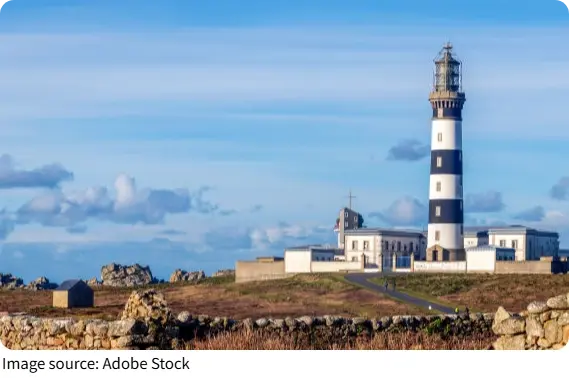
The Stiff Lighthouse (Phare du Stiff)
Begin with one of Ouessant's most historic landmarks. Built in 1695 and first lit in 1700, the Stiff Lighthouse stands near the island's northeastern coast, not far from the ferry arrival point at Le Stiff.
Its stone tower has guided sailors for centuries, and visitors can climb approximately 100 steps to enjoy views across the island and the surrounding sea.
Exhibitions introduce the lighthouse's history and the challenges of maritime navigation.
Admission is generally around €5–6 (approximately US$6–7), although opening days and hours vary seasonally.
Check access arrangements before visiting, particularly outside summer. The lighthouse is among the island's principal historic towers open to visitors.
Stiff lighthouse
Pointe de Pern
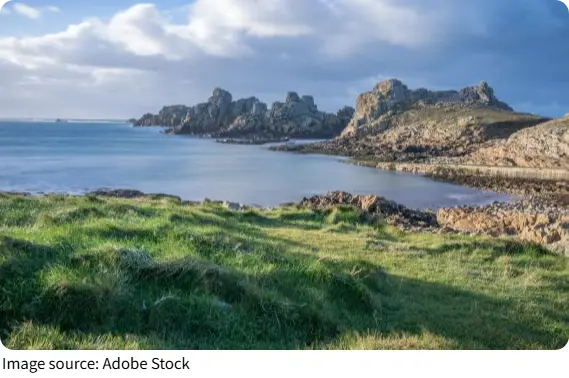
On Ouessant's western edge, Pointe de Pern offers one of the island's most dramatic Atlantic panoramas.
Jagged rocks extend into the water, waves break against the shoreline, and the offshore Nividic Lighthouse stands exposed to the elements.
This is an especially memorable place to watch the changing light, particularly toward sunset.
The headland is often described as one of the westernmost points of metropolitan France, although it is not the country's absolute westernmost point.
Follow the designated paths and keep well away from cliff edges, especially during strong winds.
Access to the coastal landscape is free, making this an excellent stop for photographers and walkers.
Pointe de Kadoran
The northeastern coastline reveals another side of Ouessant, with high cliffs, open heathland, and sweeping views across the sea.
Pointe de Kadoran is particularly appealing to visitors who enjoy quieter coastal scenery.
Walking paths cross a landscape of low vegetation, where yellow gorse and purple heather provide seasonal color against the dark rocks.
In late summer, the flowering heathland can be especially beautiful.
The exposed headland is also a reminder of the island's powerful Atlantic weather.
Wear sturdy shoes and bring a windproof jacket, even on sunny days.
Access is free, but stay on marked routes to protect the fragile vegetation and avoid dangerous cliff edges.
Créac'h Lighthouse
With its distinctive black-and-white stripes, Créac'h Lighthouse is one of Ouessant's most recognizable landmarks.
Completed in 1863, the approximately 55-meter tower stands on the island's western side, helping vessels navigate the busy waters near the entrance to the English Channel.
Its powerful light has long made it an important maritime beacon.
Even when the tower itself is inaccessible, the surrounding landscape offers striking views of the lighthouse against the Atlantic.
The nearby Museum of Lighthouses and Beacons has undergone renovation, so its reopening arrangements should be confirmed before planning a visit.
Photographing the lighthouse from public viewpoints is free, and the setting is particularly atmospheric in changing weather.
Lampaul Village
Lampaul is Ouessant's main village and a pleasant place to slow down between coastal excursions.
Traditional stone houses, small shops, cafés, and restaurants give the settlement a welcoming atmosphere.
The village is separate from the ferry terminal at Le Stiff, so allow time for the transfer after arriving on the island.
Lampaul also provides access to local heritage attractions, including the island's traditional houses and cultural collections, although museum availability can vary.
Spend some time exploring the quiet streets before stopping for a meal or gathering supplies for a picnic.
The village makes a convenient starting point for discovering the island by bicycle or on foot.
Lampaul-Plouarzel
The Coastal Path and Heather
Ouessant's coastal paths offer one of the best ways to experience its rugged beauty.
The island has an extensive network of walking routes, including a coastal circuit of roughly 38 kilometers.
Shorter sections allow visitors to enjoy sea views, rocky coves, and colorful heathland without committing to a full-day hike.
Purple heather is particularly attractive in late summer, while gorse adds yellow flowers at various times of the year.
Bicycle rentals generally cost around €15–20 (approximately US$17–23) per day, depending on the type and rental period.
Cycling is useful for traveling between landmarks, but some coastal footpaths are reserved for walkers.
Bring water, comfortable footwear, and a windproof layer, and follow designated routes through protected areas.
Ouessant is a place where the landscape sets the pace. The Stiff Lighthouse reveals centuries of maritime history, Pointe de Pern brings you close to the Atlantic's raw power, and Kadoran offers peaceful walks through windswept heathland. Between these landmarks, Lampaul provides a welcoming village atmosphere and the coastal paths invite further exploration. Whether you arrive for a day or stay longer, leave time for unexpected views, shifting weather, and the quiet beauty of this remarkable Breton island.