Highway Driving Skills

Amina Hassan
| 10-11-2026
 · Automobile team
On a busy highway, staying alert means looking beyond the car directly ahead. The earlier you notice traffic slowing or lanes filling up, the more room you have to respond.
That same habit helps when you're entering the highway, passing another car, or getting ready to exit. Each maneuver starts before you signal or turn the wheel.
Match Speed Before You Merge
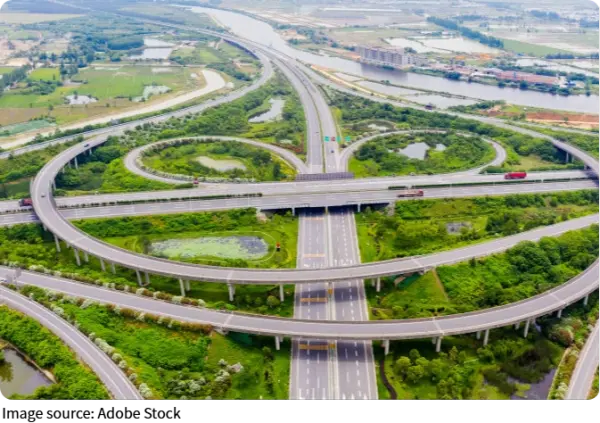
Use the entrance ramp to build speed so that, where the speed limit and conditions allow, you're close to the speed of highway traffic by the time you reach the merge point. The faster traffic is moving relative to you, the sooner an opening behind you can close.
Check your mirrors, signal early, and glance over your shoulder to check the blind spot before moving over. On a short, steep ramp, start building speed as soon as conditions allow. Yield to traffic already on the highway rather than counting on another driver to move over for you.
Leave a Real Following Gap
Use the three-second rule to check your following distance in good conditions. Pick a fixed object ahead, such as a roadside sign. Start counting when the car in front passes it and stop when you reach it. If you get there in under three seconds, ease off and check again.
Leave more space in rain or at night. A gap that looks generous when traffic is moving steadily can disappear quickly when the car ahead brakes. Use the same check after someone moves into the space in front of you, and ease back if the gap has become too short.
Pick a Lane and Stay There
Weaving between lanes to gain a few car lengths rarely pays off, and it makes your movements harder for other drivers to predict. Where traffic keeps right, use the left lane to pass and return to the right when there's room. Follow posted lane directions.
If someone follows too closely, don't tap the brakes to send a message. Keep your movements predictable. If a lane change will let the other driver pass, signal and wait until the lane is clear before moving over. There's no need to rush into a gap that isn't there.
Scan Beyond the Car Ahead
Look 12 to 15 seconds ahead rather than watching only the car in front. You might see brake lights several cars up, traffic building near an entrance ramp, or a truck drifting toward a lane line. Those cues give you time to ease off before the car ahead brakes.
Keep your eyes moving between the road farther ahead, the traffic immediately around you, and your mirrors. Glance at the gauges when you need to, then bring your attention back to the road. Looking ahead doesn't mean fixing your eyes on a single point in the distance.
Get Into Position for Your Exit
Use the advance signs to identify the exit lane before the ramp appears. Move over when you have a clear gap, rather than waiting until you can see the turnoff. If you can't reach the exit lane in time, stay in your lane and take the next exit.
Stop Before You Get Too Tired
On a long highway drive, plan a break every two hours rather than waiting until you feel tired. If you start yawning repeatedly or notice yourself drifting within your lane, don't wait for the planned break. Leave the highway and stop somewhere safe as soon as you can.
Turning up the radio or rolling down the window isn't a substitute for stopping. Use a rest area or another safe place off the highway rather than trying to push through to your destination. If you're still too tired to drive after stopping, don't get back on the road.
Before your next highway trip, check which side your exit is on. If you're unfamiliar with the route, note the exit name before you set off.