How Tire Tread Works

Tessa
| 13-11-2026
 · Automobile team
You probably look at your tires every day without thinking much about the pattern in the rubber.
That pattern helps the tire stay in contact with the road as conditions change. Knowing what the tread and sidewall markings tell you can help you check for wear and choose tires for the roads you drive.
How Grooves Move Water
One job of tread is to move water out of the way so the rubber can stay in contact with the road. The deep channels that run around the tire are called circumferential grooves. A typical passenger tire has three or four of these, each roughly 8 to 10 millimeters wide.
When a tire rolls through a puddle, those channels give water somewhere to go instead of letting it build up under the tread. As the tread wears, the shallower grooves can carry away less water. That raises the risk of hydroplaning, when a layer of water separates the tire from the road.
How Blocks and Sipes Grip
Grooves separate the raised blocks of rubber that meet the road. Look closely at a tread block and you may see narrow slits cut across its surface. These are called sipes, and on winter tires there can be hundreds of them. They're much finer than the grooves between the blocks.
As the block flexes where it meets the road, a sipe can open slightly, exposing extra edges that help the tire grip snow or wet pavement. Compare a winter tire with a summer tire and you'll often see more of these fine cuts across the winter tire's blocks.
What Sidewall Markings Mean
On a directional tire, the sidewall arrow shows which way the tire should turn when the vehicle moves forward. The channels in that tread pattern are shaped to move water as the tire rolls in the indicated direction. Mounting it backward can make the tread less effective at clearing water.
An asymmetric tire has a different pattern on the inner and outer parts of the tread. In this case, the sidewall marking tells you which side of the tire faces out, rather than which way it should turn. If the tire is mounted inside out, the two parts of the tread can't work as intended.
How to Check Tread Wear
Look for the small wear indicators molded across the grooves at about 2/32 of an inch. They sit below the tread surface when the tire is new. As the rubber wears, the tread gets closer to the top of the indicators. When the two are level, it's time to replace the tire.
The front and rear tires can wear at different rates, even on the same car. Rotating the tires moves them to different positions so the set wears more evenly. An interval of 5,000 to 8,000 miles is a general guide, but use the rotation schedule in the owner's manual for your vehicle.
Match the Pattern to the Road
There's no single best tread pattern for every road. A summer tire with large blocks and few sipes can grip dry pavement well, but summer tires can stiffen and lose grip in cold weather. An all-season tire balances grip in different conditions rather than specializing in either summer or winter driving.
If you regularly drive on snow, a dedicated winter tire with closely spaced sipes generally offers better grip on snow than an all-season tire. Think about the roads you actually use and how often you drive on them in winter, not just the worst storm you remember.
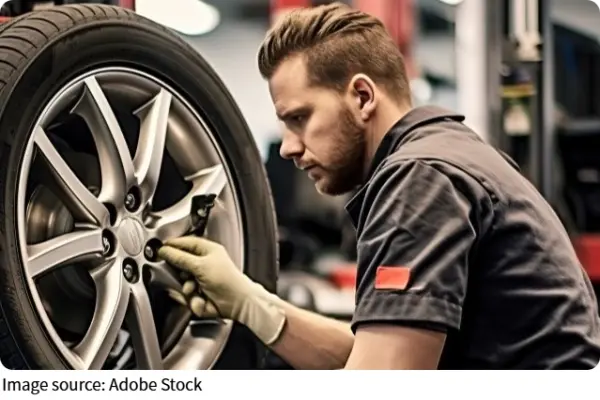
Before your next long drive in the rain, check the wear indicators in several grooves on each tire. Don't judge the whole tread by the first spot you can see.