Pineapple: What It Does

Hana
| 11-11-2026
 · Cate team
Welcome to today's article. Pineapple looks like a simple sweet fruit you slice up for a snack, but it's carrying more than sugar and juice.
A single cup of fresh chunks gives you roughly 80 calories and well over 100 percent of your daily vitamin C, which is a lot for something that tastes this good.
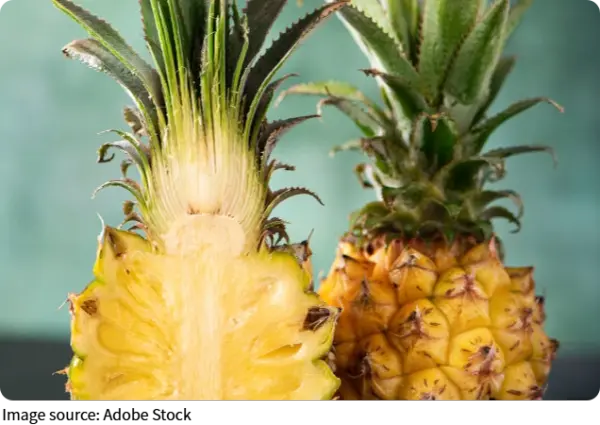
The vitamin C load is real
One cup of raw pineapple chunks covers your vitamin C needs for the day and then some. That matters because vitamin C supports normal immune function and helps your body absorb iron from plant foods. If you're eating a lentil or spinach dish, a few pineapple slices alongside it do more than you'd expect. The fruit also brings in smaller amounts of vitamin B6, folate, and potassium, so it's not a one-nutrient show.
Bromelain does the interesting work
Pineapple is one of the few foods with a meaningful amount of bromelain, an enzyme mix found in the stem and juice. Bromelain is commonly linked to reduced swelling and easier digestion of protein, though the amounts in a few slices are modest. You'll notice it directly if you make fresh pineapple gelatin, the dessert won't set because the enzyme breaks down the protein structure. Cooked or canned pineapple doesn't do this, since heat deactivates the enzyme.
Fiber without much effort
A cup of pineapple delivers about 2 grams of fiber, mostly in the flesh you eat along with the juice. That's not huge, but it's part of why the fruit feels filling without being heavy. The fiber plus the water content, pineapple is around 86 percent water, makes it a practical choice on a hot day when you want something sweet that doesn't sit like a brick.
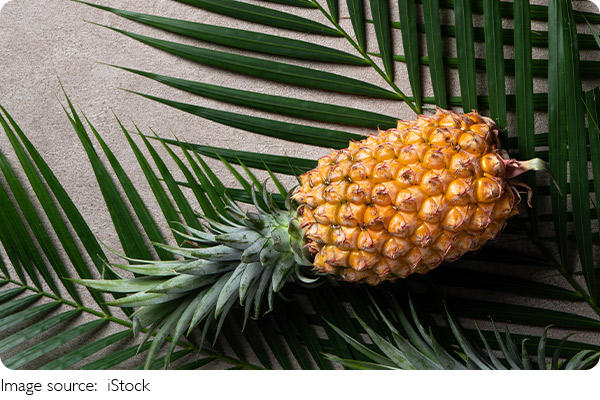
Watch the acid and the sugar
Fresh pineapple is acidic, and eating a lot of it on an empty stomach can leave your mouth feeling raw or your stomach a bit unsettled. The enzyme also breaks down the protein in your mouth's soft tissues, which is why some people get a tingling or sore tongue after several slices. If that happens to you, pair it with yogurt or a meal rather than eating half a fruit alone. And if you're watching blood sugar, keep portions to about a cup, since the natural sugars add up fast in juice form.
How to pick and store it
Skip the urge to judge by color alone. A ripe pineapple smells sweet at the base and gives slightly when you press it, and the leaves pull out with mild resistance. Whole fruit keeps on the counter for a couple of days, then move it to the fridge, where cut chunks last about three to four days in a sealed container. Leave the core in if you're blending, it holds extra bromelain and fiber.
So next time you reach for a snack, remember that pineapple earns its place beyond the flavor. Grab a cup of fresh chunks, pair it with something savory, and you'll get the vitamin C and the enzyme without overdoing the acid.