Laguna Colorada Guide

Eleanor
| 13-11-2026
 · Travel team
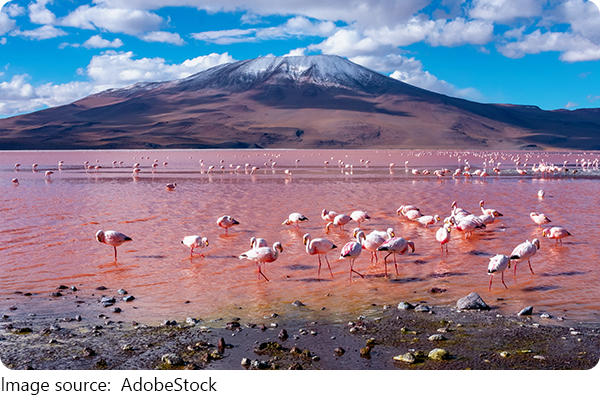
Hi, let's get started. You've probably seen photos of a lake that looks impossibly red, framed by mountains and dotted with pink birds, and assumed the color was edited.
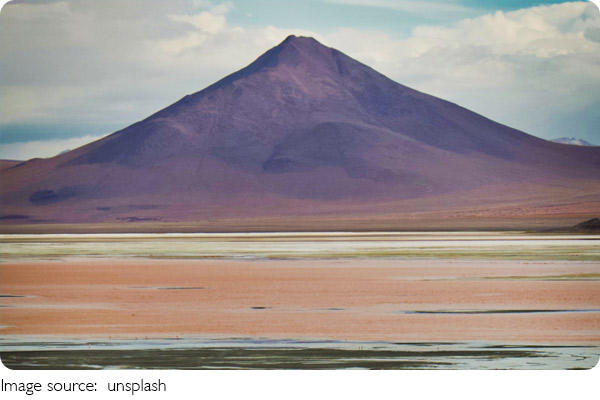
It isn't. Laguna Colorada sits at roughly 4,200 meters in Bolivia's Eduardo Avaroa Andean Fauna National Reserve, and the water really does run from rust red to deep brick depending on the light and the wind.
Why the water turns red
The color comes from sediment and algae, not minerals in the way people often assume. Tiny algae bloom in the shallow, salty water, and the reddish pigment they carry tints the surface. Wind stirs the sediment, so the lake looks different every hour. On a calm morning you'll see a clear red sheet; by afternoon, with gusts coming across the altiplano, patches turn brownish and the white borax islands stand out more against the water.
What you'll actually see there
Three things are worth your attention. First, the flamingos: three species feed in the lake, and you'll spot them in groups wading near the shore, mostly between November and March when the water level suits them. Second, the borax islands, white mineral formations that sit in the red water and make the contrast obvious from the viewpoints. Third, the surrounding reserve itself, which holds the Sol de Mañana geysers and the green lake, Laguna Verde, within a short drive. Most visitors combine all of it into one loop rather than treating Colorada as a single stop.
Getting there and the route order
Almost everyone reaches the lake from Uyuni, on a three to four day 4x4 tour that also covers the salt flats. The standard route runs Uyuni, then south through San Juan and the Siloli Desert, arriving at Laguna Colorada late in the day, then looping back north via Laguna Verde and the geysers. Tours typically cost $150 to $250 per person for the multi-day trip, with park entry paid separately, around 150 bolivianos, which works out to roughly $20 to $25 in USD. Bring cash in bolivianos; card readers are not a thing out there.
Handling the altitude
This is the part that catches people. You're sleeping above 4,000 meters, and the air holds far less oxygen than you're used to. Spend at least two nights in Uyuni or San Pedro de Atacama before heading up so your body has some adjustment time. Drink more water than feels necessary, skip anything strenuous on the first afternoon, and tell your driver if you get a bad headache. Most tour operators carry oxygen and coca leaves, and the guides deal with altitude sickness constantly.
Timing and what to pack
Winds pick up from May through August, and nights drop well below freezing, so a down jacket, gloves, and a hat are not optional even if the daytime sun feels warm. The wetter months from December to March bring more flamingos and greener surroundings, but some routes get muddy. Sunscreen matters more than you'd think at this elevation, and a buff or scarf helps against the dust kicked up by the 4x4s.
Book your tour a day or two ahead in Uyuni rather than months out, since operators run frequently and prices don't swing much. Ask what's included in meals and park fees before you pay, and confirm whether your group sleeps in a basic refuge or a hotel made of salt. That last detail changes the experience more than any other.
Go in expecting thin air, cold nights, and a lake that shifts color as the wind moves across it. Bring layers, take the altitude seriously, and let the flamingos be the reason you stop walking for a while.