Merzouga: Erg Chebbi Gateway
Naveen Kumar
| 13-11-2026
 · Travel team
Hello, and thank you for reading. Merzouga looks like a small, dusty town at the edge of nothing, and that's exactly the point.
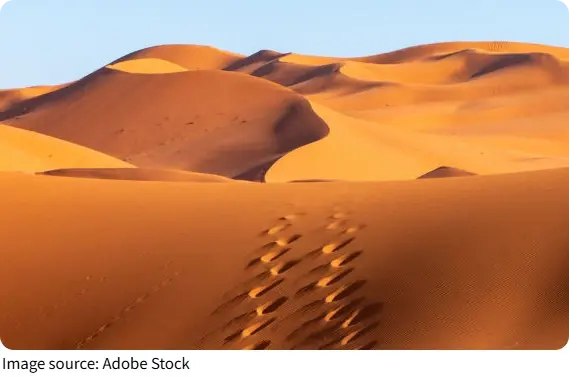
It sits right beside Erg Chebbi, a stretch of orange sand dunes that rise up to roughly 150 meters high, and most travelers come here for one reason: to sleep out on those dunes and watch the desert change color at sunrise.
Why the dunes pull people in
Erg Chebbi is the main attraction, a band of dunes about 22 kilometers long and up to 5 kilometers wide, and it's the closest thing Morocco has to the postcard Sahara. You don't need a tour to see it, but you do need a guide or a 4x4 to get deep into the sand. The classic move is a camel trek that leaves late afternoon and arrives at a desert camp before dark. The ride itself takes around an hour and a half at a walking pace.
Getting there and getting around
Most people reach Merzouga by road from Marrakech or Fes. From Fes it's roughly 7 to 8 hours by car or shared grand taxi, and from Marrakech it's closer to 9 or 10 hours, so many travelers break the trip in Ouarzazate or Todra Gorge. Buses run to nearby Rissani, then a short taxi covers the last stretch into Merzouga. Once you're in town, everything is walkable, and the dunes start right at the edge of the buildings.
What a night in camp costs
Desert camps range widely. A basic Berber tent with dinner and breakfast runs around $40 to $60 per person, while a comfortable camp with private bathrooms and real beds can hit $150 to $250 per person. Camel treks are usually bundled into the camp price, but confirm that before you book. A 4x4 transfer into the dunes instead of a camel ride typically adds $30 to $50 per person.
Timing your visit right
Skip the middle of summer. July and August push daytime temperatures past 40°C, and the sand gets genuinely painful underfoot. October through April is the sweet spot, with mild days and cold nights, sometimes near freezing in December and January, so pack a warm layer. Book your camp at least a few days ahead in high season, and longer around New Year, when the good camps fill up.
Practical tips before you go
Bring a scarf for the sand and wind, and expect fine dust in everything by the end of the day. Cash matters here: many small camps and shops don't take cards, so withdraw dirhams in Rissani or Erfoud before you arrive. If you're driving yourself, park at the edge of town and let your camp arrange the pickup, because a standard rental car will not handle the dunes.
The thing worth remembering about Merzouga is that the town is just the doorway. The trip lives in the hour you spend walking up a dune at dusk with sand in your shoes, so book the camp, bring the scarf, and let the desert do the rest.