Salar de Aguas Calientes

James Carter
| 13-11-2026
 · Travel team
Hi there, readers. You probably know the big salt flats of Bolivia, the ones every tour bus circles.
But Salar de Aguas Calientes is a different animal, a smaller high-altitude salt pan tucked into the Chilean altiplano near the border with Bolivia, and it rewards the people who make the long drive north.
Where this salt flat sits
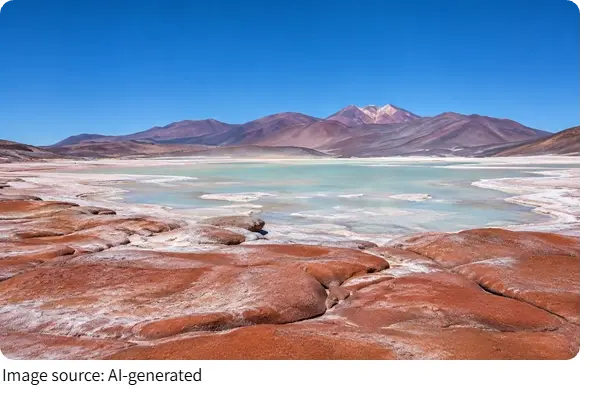
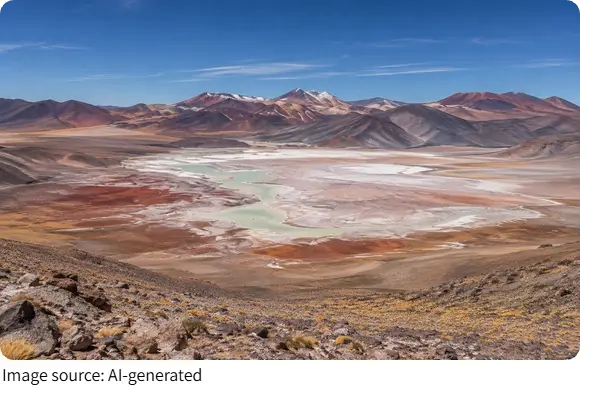
Salar de Aguas Calientes sits in the Antofagasta region of northern Chile, at roughly 4,000 meters above sea level, close to the village of Ollague and the Chungara area. The name means "salt flat of warm waters," and it comes from the hot springs that bubble up around the edges. You'll pass it on the road between San Pedro de Atacama and the altiplano lagoons, and it's often paired with a stop at the nearby Salar de Tara. The altitude is the first thing to respect. At 4,000 meters, the air holds less oxygen, so plan a slow first day and skip anything strenuous.
Hot springs on the salt
The warm pools are the reason most travelers remember this place. They sit at the edge of the salt crust, and the water stays comfortably warm even when the wind is cutting across the flat. The pools are shallow and small, so a soak is short, but the setting is what makes it. You're sitting in warm water at 4,000 meters with white salt stretching out and volcanoes on the horizon. Bring a towel and dry quickly, because the wind here drops temperatures fast once you're wet.
Flamingos and open sky
The altiplano lagoons near the salt flat draw three species of flamingo: Andean, James's, and Chilean. They feed in the shallow water and are most active in the morning. Bring binoculars if you have them, since the birds keep their distance. The light up here is intense, and the salt reflects it back at you, so sunglasses are not optional. The open sky at this altitude also makes the place a favorite for photographers chasing clear, hard light.
Getting there and timing
There's no public transport to the flat itself. Most visitors join a guided 4x4 tour from San Pedro de Atacama, which sits about 200 kilometers south, and those tours typically run as full-day trips that combine the salt flat with the nearby lagoons. Expect to pay around $80 to $120 per person for a shared day tour, and more for a private vehicle. The road climbs steadily, and the drive from San Pedro takes several hours each way. Go in the dry season, from roughly April through October, when the roads are open and the sky is clearest. The wet season, December through March, can close routes with snow and rain.
What to plan for
The altitude is the real planning issue. Spend at least two nights in San Pedro de Atacama to acclimatize before heading higher. Drink more water than you think you need, and go easy on the first afternoon. Pack layers, because the temperature swings from warm in the sun to near freezing in the wind. And carry cash, since card readers are unreliable up here. A small practical note: the border area near Ollague is a working crossing, so keep your passport with you in case a checkpoint asks for it.
The takeaway is simple. Salar de Aguas Calientes is not the biggest salt flat you'll ever see, but the combination of warm springs, flamingos, and thin air makes it one worth the drive. Next time you plan a northern Chile trip, build in a day for it and give yourself the time to acclimatize.