Lake Titicaca, Up Close

Adrian
| 13-11-2026
 · Travel team
Welcome to today's article. You probably know Lake Titicaca as the highest navigable lake on Earth, sitting around 3,810 meters above sea level between Peru and Bolivia.
But it's not just a photo stop. The lake is huge, roughly 8,300 square kilometers, and the towns and islands around it each feel different. Give it two or three days and you'll understand why people keep coming back.
Lake Titicaca
Why the altitude changes everything
The first thing you'll notice is the air. At this height, walking up a flight of stairs can leave you breathing hard, and the sun burns fast even when the breeze feels cool. Puno, the main Peruvian gateway on the western shore, sits at about 3,830 meters. Plan your first day light: drink water, skip the big hike, and let your body adjust. Most travelers feel noticeably better by the second morning. Pack sunscreen and a warm layer, because nights drop close to freezing even in the dry season.
Plan your arrival and getting around
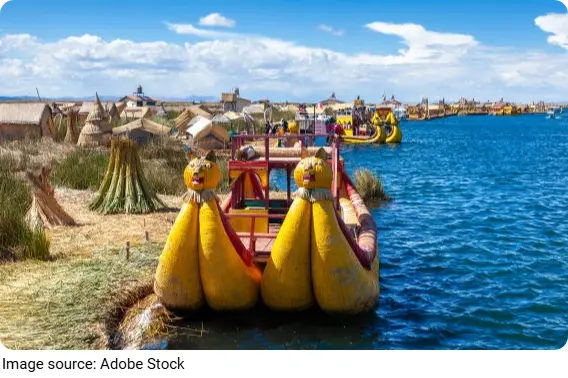
Most trips start in Puno, reachable by a scenic ten-hour bus ride from Cusco or a short flight into Juliaca's airport, about 45 minutes away by road. From Puno's harbor, boats leave for the Uros floating islands and Taquile, usually as day tours or overnighters. A standard day trip to Uros and Taquile runs around $30 to $45 per person, while a slower two-day stay on Amantani with a local family often costs $50 to $80 including meals and transport. Book through your hostel or a reputable agency in town, and confirm whether the price covers the island entry fees, which are collected separately.
What to actually see out there
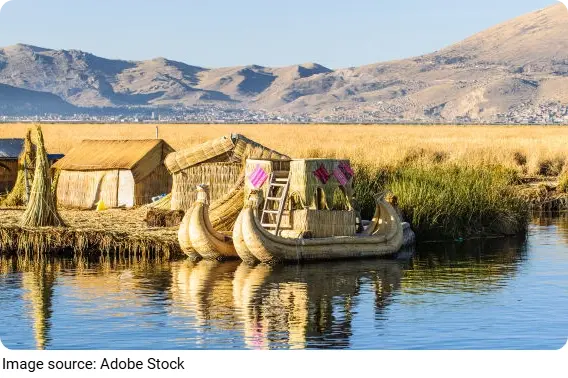
The Uros floating islands get the crowds, and they're worth a morning, but don't stop there. Taquile Island is known for its textile traditions, and the men here knit the distinctive chullos you'll see everywhere. The walk to the main village takes about an hour uphill from the dock. Farther out, Amantani offers quieter homestays and a climb to Pachatata, a hilltop site with views across the whole lake. On the Bolivian side, Copacabana town and the Isla del Sol draw travelers who want fewer boats and more hiking.
Timing, costs and a smart booking tip
The dry season from May to October brings clear skies and cold nights; the rainy months from December to March mean greener hills but occasional canceled boats. Whatever you book, ask for the exact departure time and the boat's capacity. Small operators sometimes overload, so a slightly higher price for a licensed boat with life jackets is money well spent. Keep some cash in small bills for island fees and crafts, since ATMs on the islands don't exist.
The lake rewards you most when you slow down and spend a night on an island instead of rushing back to Puno. Take the altitude seriously, budget a little extra for a proper boat, and let the place set your pace. Next time you're planning a Peru trip, give Titicaca the days it deserves.