Perito Moreno Glacier Guide

Anika
| 13-11-2026
 · Travel team
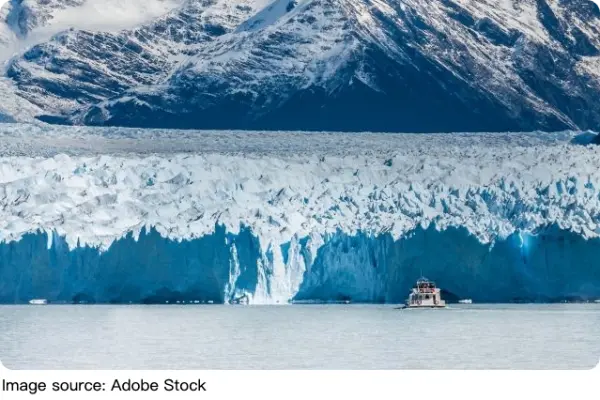
Welcome back. You've probably seen a photo of Perito Moreno without knowing its name: that wall of blue ice calving into a milky lake in Argentine Patagonia.
It's one of the few glaciers on earth that's still advancing, and unlike most of the world's ice fields, you can get close enough to hear it snap.
Why this glacier stands out
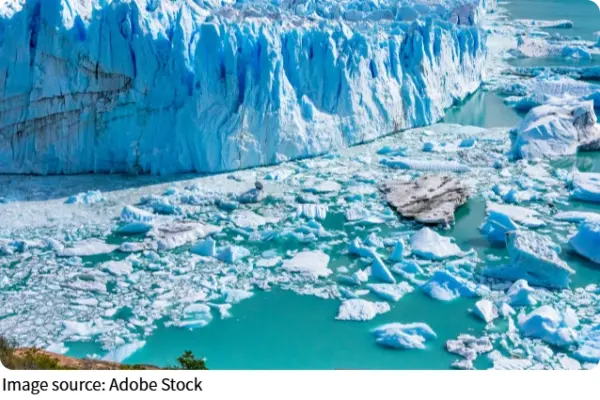
Perito Moreno sits inside Los Glaciares National Park, about 78 kilometers from the town of El Calafate in Santa Cruz province. What makes it unusual is its stability. While most glaciers worldwide are retreating, this one has cycled through advance and retreat for decades, and it regularly dams the southern arm of Lago Argentino, building up water pressure until it ruptures through in a dramatic natural event. The ice front runs roughly 5 kilometers wide and stands around 60 meters above the water at its tallest points.
The walkways you shouldn't skip
The park's network of metal boardwalks gives you a front-row view without any climbing. Start at the main viewing balcony near the car park, then work your way along the circuit toward the lower platforms, where the ice face fills your whole frame. The Pasarela de los Suspiros section is quieter and lets you watch the calving without a crowd at your back. Give yourself two to three hours on the walkways; the light shifts through the day and the ice turns a deeper blue in the afternoon.
Walking on the ice itself
The classic Minitrekking excursion puts you on the glacier for about an hour and a half, crampons strapped to your boots, roped to a guide. You'll cross uneven ice, step over small crevasses, and finish with a hot drink at a shelter on the moraine. Expect to pay roughly $150 to $200 USD for the full-day tour, which includes the boat crossing and park entry is billed separately at around $30 USD for foreign visitors. The Big Ice trek runs longer, around five hours on the ice, and suits people who are reasonably fit.
Getting there and timing your trip
Most travelers fly into El Calafate, then take a bus or organized transfer to the glacier, roughly 1.5 hours each way. Buses leave early morning and return mid-afternoon, so book ahead in high season. The best months are November through March, when days are long and temperatures sit around 10 to 15 degrees Celsius, though wind chill makes it feel colder. Bring a waterproof shell, gloves, and sunglasses; the glare off the ice is real.
Practical planning notes
Book your Minitrekking slot well in advance, since daily numbers are capped and the operator sells out in peak weeks. Carry cash for park fees and lockers, and pack your own lunch, as food options inside the park are limited and pricey. If you have a spare day, the town of El Chaltén to the north offers additional trails and views of the Fitz Roy range.
Go stand on the boardwalk at the right moment and you'll hear the ice before you see it move. That sound stays with you longer than any photo.