Valley of the Moon, Atacama

Sophie
| 13-11-2026
 · Travel team
Hi, everyone. You'd expect a place called the Valley of the Moon to be a quiet, empty stretch of rock.
Instead, you get one of the most visited sites in northern Chile, and for good reason: the salt formations, the sand dunes, and the light at dusk do most of the work here, and you don't need a guide to feel it.
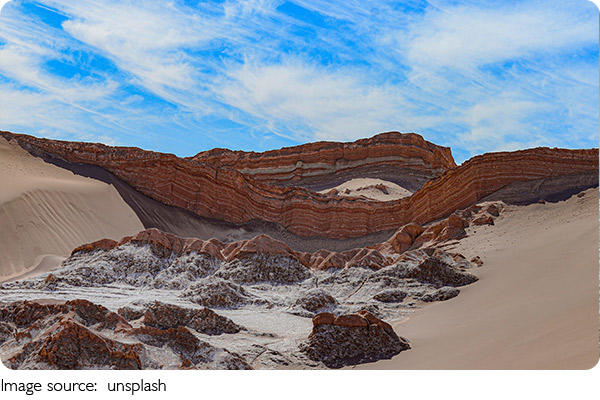
Why the name fits
The valley sits about 13 kilometers west of San Pedro de Atacama, inside the Los Flamencos National Reserve. The landscape is dry salt crust, clay, and sandstone carved by wind and rare water. NASA has used the area to test instruments for Mars missions, which tells you how little vegetation and moisture you'll find. That barren look is the whole appeal.
What to see first
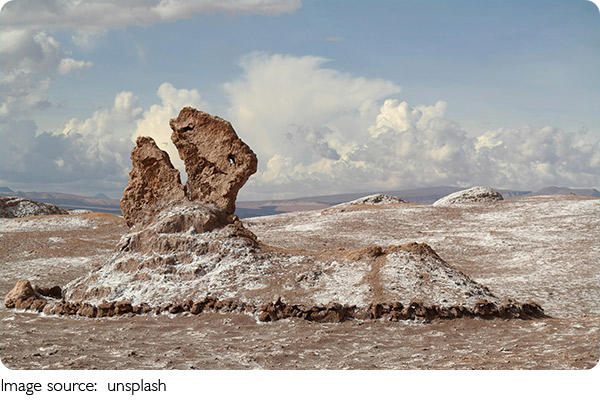
Two stops anchor most visits. The Tres Marías are three tall rock formations standing apart in the open salt plain, easy to spot from the main road. Then there's the Duna Mayor, a large sand dune where people climb the ridge for the sunset view over the Cordillera de la Sal. The Caverna de Sal, a salt cave you can walk through, is a short detour and worth the ten minutes.
Timing and the sunset
Go in the late afternoon. The park typically opens around 8:30 a.m. and closes in the evening, and the last entry is usually tied to the sunset window, so check the current schedule when you arrive in San Pedro. The light between roughly 6 and 7:30 p.m. turns the ridges orange and pink, and that's when the crowds show up too. Arrive early if you want the dune ridge to yourself.
Getting there and what it costs
You can drive yourself or join a tour from San Pedro. The entrance fee runs around 3,000 to 5,000 Chilean pesos, roughly $3 to $6 USD, though prices shift, so confirm at the gate. A guided tour usually costs $25 to $40 USD per person and includes transport. If you drive, the road is gravel and sandy in spots, and a standard car handles it fine in dry weather.
Practical tips before you go
Bring layers. The desert is hot at midday and cold once the sun drops, and the wind picks up on the ridges. Carry water, wear closed shoes for the salt cave, and don't count on phone signal out there. Also, the altitude sits around 2,400 meters, so take the first hour slow if you've just flown into Calama.
The Valley of the Moon rewards a little planning and a lot of patience with the light. Go late, walk the dune ridge, and let the sunset do the rest.