Meteora
Samir
| 13-11-2026
 · Travel team
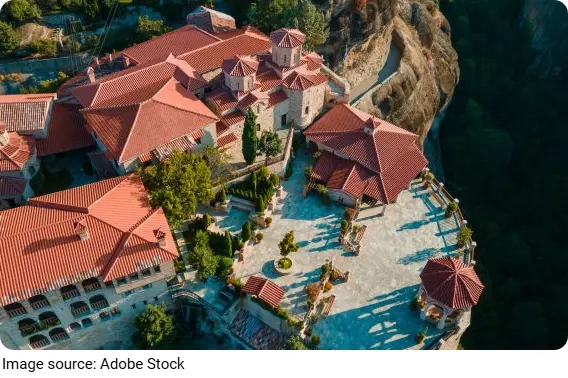
Hello, readers. Most people see Meteora in photos first, usually a stone tower with a red-roofed monastery balanced on top, and assume the place is tiny.
It is not. The monastery complex spreads across a cluster of rock pillars near the town of Kalambaka, and the roads between them climb and switchback for miles. You need a plan, or you'll spend half a day figuring out which rock holds which building.
What the rocks actually are
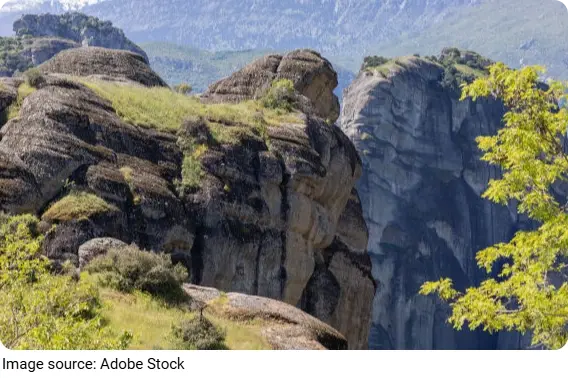
The pillars are sandstone and conglomerate, shaped by water and wind over millions of years, and they rise up to about 400 meters above the valley floor. Monks started building on top of them in the 14th century, hauling materials up in nets and baskets. Six monasteries still operate and accept visitors: Great Meteoron, Varlaam, Rousanou, St. Nicholas Anapafsas, Holy Trinity, and St. Stephen's. Each one sits on its own pillar, so you're not visiting a single site. You're driving between six.
Getting there and getting around
The train from Athens to Kalambaka takes about four and a half hours, and it's the easiest option if you don't want a car. From Kalambaka, the monasteries are roughly 2 to 5 kilometers away depending on which one you target. Local buses run a loop in the morning, but the schedule is thin. Renting a car in Kalambaka gives you the most control, and parking lots sit near each monastery entrance. Taxis work too and cost around 10 to 15 USD for a short hop between rocks. Wear real shoes. The paths are stone, and some of the staircases cut straight into the cliff.
The ticket math you should know
Each monastery charges its own small entry fee, usually around 3 to 5 USD per person. That adds up if you hit all six, so pick three or four. Great Meteoron is the largest and the busiest, and it opens around 9 a.m. Varlaam sits close by and holds a collection of old manuscripts. Rousanou is the one most photographers chase, since it perches on a narrow pinnacle and the light hits it well in late afternoon. Holy Trinity requires the longest walk, up a path and then a set of stairs carved into the rock, and that climb is the reason some people skip it. Don't skip it if your knees are fine.
Dress codes and timing
Modest dress is enforced at the door. Women need skirts below the knee, and the monasteries hand out wraps at the entrance if you show up in shorts. Men should cover their shoulders. Go early. By 11 a.m. in summer the tour buses arrive, and the narrow courtyards get crowded fast. The monasteries close on different days for maintenance, so check each one before you build a route. Most shut by 5 p.m. in winter and stay open later in summer.
Where to sleep and what it costs
Kalambaka has the widest range of guesthouses and small hotels, with rooms commonly around 50 to 90 USD a night. Kastraki, the smaller village closer to the rocks, is quieter and puts you five minutes from the first monastery gate. Book ahead in spring and fall, since those are the busy seasons. Sunset from the viewpoint above Kastraki draws a crowd every evening, and it's free. Bring a jacket even in summer, because the wind on the rocks is real.
The whole trip works best as two days: one for the monasteries, one for the hiking trails that link them. Remember the small stuff, the skirt, the cash for entry fees, the early start, and Meteora will give you a morning you'll talk about for years.