Watermelon Nutrition

Pankaj Singh
| 13-11-2026
 · Cate team
A slice of watermelon looks like dessert, and plenty of people file it away as nothing more than sweet water.
That reputation undersells it. The flesh has more to offer than its sweetness, and the parts that usually get left on the plate have their uses, too.
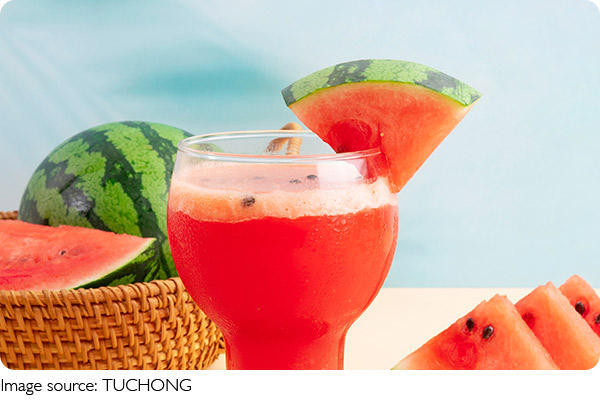
Water and Calories
Watermelon is about 91 percent water by weight. That helps explain why a 100-gram serving has about 30 calories, compared with about 89 calories for the same weight of banana. The comparison is by weight because a wedge and a whole banana aren’t necessarily the same size.
According to Lara Whitson, a registered dietitian, watermelon’s high water content makes it a snack that contributes to hydration, especially on a hot day.
Lycopene in the Red Flesh
Lycopene is the pigment that gives red watermelon its color. It’s the same compound that gives ripe tomatoes their red hue. A cup of diced watermelon contains 6,890 micrograms of lycopene, though the amount can vary with the variety and ripeness.
Your body absorbs lycopene better when you eat it with oil-based foods. If watermelon is the whole snack, have a few nuts alongside it. If you’re serving it with a meal that already contains some lipids, there’s no need for a separate pairing.
Vitamin C and Citrulline
A cup of diced watermelon provides 12.3 milligrams of vitamin C. This vitamin supports normal immune function and helps your body absorb iron from plant foods. That gives watermelon a place alongside a meal with beans or lentils, not just at the end of it.
Watermelon also contains citrulline, an amino acid the body converts to another amino acid called arginine. Arginine helps the body make nitric oxide, which relaxes blood vessels. That’s why citrulline comes up in discussions of blood flow, but a serving of watermelon isn’t a treatment for circulation problems.
Potassium in a Serving
A cup of diced watermelon contains about 170 milligrams of potassium, a mineral that helps regulate blood pressure. Bananas provide more potassium for the same weight, so the two aren’t interchangeable if potassium is what you’re comparing. Watermelon still contributes some when you choose it instead.
Sugar and Portion Size
Watermelon contains 6.2 grams of naturally occurring sugar per 100 grams. A cup of diced watermelon has 9.4 grams of sugar, while a medium wedge has 17.7 grams. A wedge can look like a single serving on a plate even when it holds considerably more fruit than a cup.
If you’re tracking carbohydrates, dice the flesh and measure it in a cup rather than counting wedges. The amount of fruit on the plate is more useful than guessing from how sweet it tastes.
Uses for the Rind and Seeds
The firm white rind just beneath the green skin contains citrulline, too. Trim away the tough outer skin and use the white part for pickles or slice it thinly for a salad. It has a firmer bite than the flesh, so the two parts bring different textures to the plate.
The seeds are edible and contain magnesium. They can be roasted and seasoned separately rather than left in the flesh. If you like the crunch, scatter the roasted seeds over a salad instead of throwing them away with the outer skin.
Picking and Preparing a Melon
Look for a creamy yellow field spot, the mark where the watermelon rested on the ground as it ripened. A good melon should feel heavy for its size. Compare it with another of similar size, and leave behind any with cuts, bruises, or soft spots.
A whole melon can sit at room temperature for about a week. Choose a size you’ll be able to finish once you cut it. Before slicing, scrub the outside under cool running water so you don’t carry dirt from the rind into the flesh.
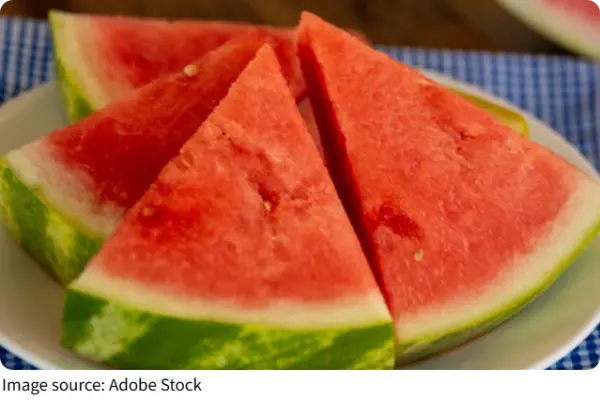
Refrigerate cut watermelon in a covered container and eat it within three to four days. If you cut more than you’ll use, freeze the extra cubes for smoothies.