Mango Nutrition and Uses

Nora
| 13-11-2026
 · Cate team
A ripe mango tastes so sweet that it's easy to think of it as a treat and nothing more. That soft flesh also contains vitamins, minerals, and fiber.
The nutrition figures are easier to interpret when you know how much fruit they describe. And whether you're making breakfast or a savory side, the variety and ripeness can help you decide how to use it.

What's in a Cup
A cup of diced mango weighs about 165 grams and contains around 100 calories. It provides about 60 milligrams of vitamin C, 2.6 grams of fiber, and roughly 280 milligrams of potassium. Those figures refer to the edible flesh, not the peel or pit.
That cup also contains around 23 grams of naturally occurring sugar. A whole mango can contain close to 200 calories, but mangoes vary in size. If you're tracking your intake, measure the diced flesh rather than assuming that a whole fruit is the same as the reference serving.
Why the Orange Color Matters
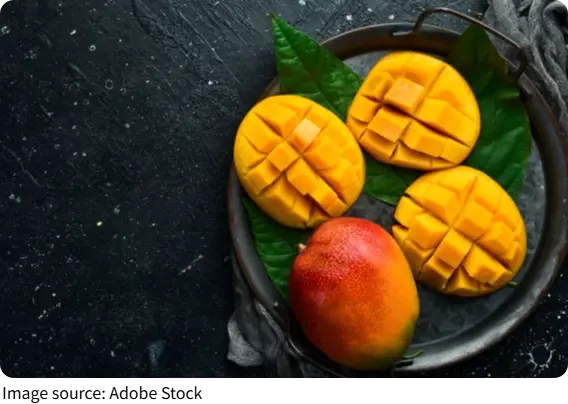
Beta-carotene is one of the pigments that give mango flesh its orange color. According to Carly Sedlacek, a registered dietitian at Cleveland Clinic, mango contains beta-carotene, which the body can convert into vitamin A to support normal vision. Carrots and sweet potatoes also contain this pigment.
Vitamin C and Iron
Vitamin C supports normal immune function and helps the body absorb iron from plant foods. Try diced mango in a spinach salad or alongside a bowl of lentils. The vitamin C comes from the fruit, while the spinach or lentils provide plant-based iron.
Fiber and Texture
Mango contains both soluble and insoluble fiber. The terms describe how the fibers behave in water: soluble fiber dissolves in it, while insoluble fiber does not. A ripe mango can feel soft and smooth and still provide dietary fiber. Stringiness is a feature of the flesh, not a measure of the fiber in a serving.
Fresh and Dried Mango
Dried mango contains less water than fresh mango, so its natural sugars are more concentrated by weight. Some versions also contain added sugar. If you're comparing packages, look at the serving size as well as the added sugar line, since the amounts on the labels may describe different portions.
How to Check Ripeness
For soft, ripe flesh, give the mango a gentle squeeze. It should yield slightly, and it may smell sweet at the stem end. Don't rely on a red blush to tell you it's ready. Peel color varies by variety, so a green mango isn't necessarily unripe.
The small yellow Ataulfo, often sold as a honey mango, tends to be sweet and smooth. The red-green Tommy Atkins can have firmer, stringier flesh. If you're buying mango to eat plain with a spoon, the smoother texture of an Ataulfo may be the better fit.
Ways to Serve It
Fresh mango works in a yogurt bowl, blended into a smoothie with plain kefir, or diced into a salsa with red onion and lime. For a slaw, use unripe mango instead. Its firmer flesh holds its shape when sliced thinly, and it tastes less sweet than ripe fruit.
How to Store It
Leave a firm mango on the counter to ripen. Once it softens, move it to the fridge if you're not ready to eat it. A ripe mango can keep for up to five days refrigerated whole. Once cut, refrigerate the pieces in a covered container and use them within two to three days.
If you have more ripe mango than you'll use in that time, spread the cubes on a tray to freeze them separately. Once they're firm, transfer them to a sealed freezer bag. That way you can take out just what you need for a smoothie without thawing the whole batch.
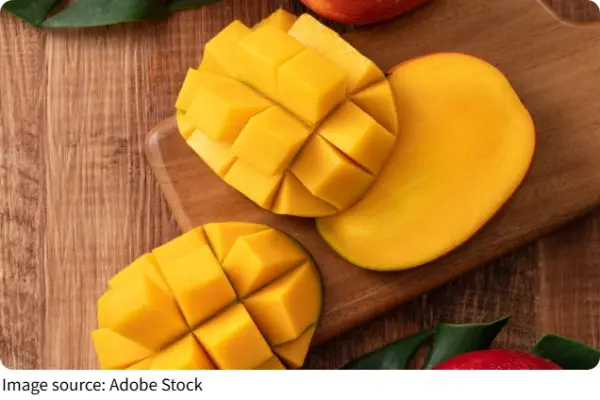
If the mango you bought is still firm and you want it ripe sooner, put it in a paper bag on the counter and check it daily.