Harbin in Winter

Arjun
| 20-11-2026
 · Travel team
Hi, and welcome. Harbin gets filed under "ice festival city" by most travelers, and that's fair, but it sells the place short.
The Ice and Snow World runs for a few weeks each winter and draws the crowds, yet the rest of the city holds up on its own, with Russian-era architecture, a river that freezes solid enough to cross on foot, and a food scene built for cold weather. You don't need the festival to justify the trip. You just need a warm coat and a plan.
Harbin
Why the cold is the draw
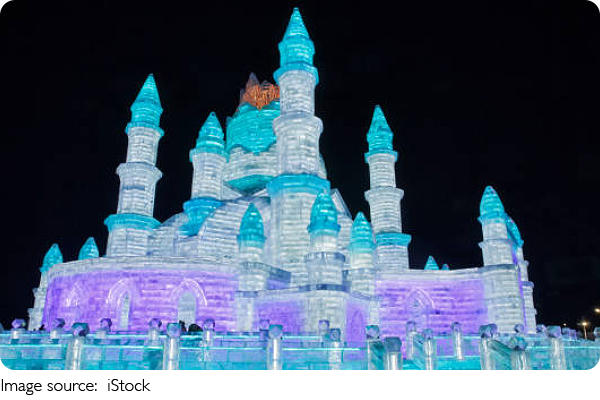
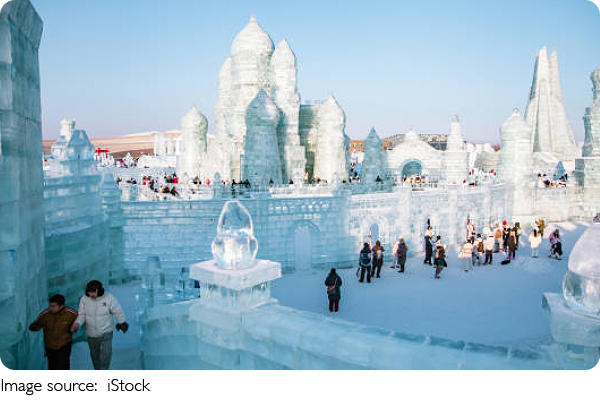
Harbin sits in Heilongjiang province, in the far northeast of China, and winter temperatures routinely drop to minus 20 Celsius and below. That sounds like a reason to stay home. Instead, it's the reason the city exists as a travel destination. The Harbin Ice and Snow World, usually open from late December into February, builds full-scale structures out of ice blocks pulled from the Songhua River, and the scale is the point. You'll walk through ice replicas of cathedrals and palaces lit from inside, and the whole site covers roughly 600,000 square meters. Bring hand warmers. Bring two pairs of socks. The cold is real and it doesn't negotiate.
What to see beyond the ice
Central Street, or Zhongyang Dajie, is the spine of the old city, a cobblestone pedestrian road lined with Baroque and Art Nouveau buildings left from the Russian influence that shaped Harbin in the early 1900s. Walk it in the evening when the facades are lit. Saint Sophia Cathedral, a green-domed Orthodox house of worship turned museum, sits a few blocks off the street and is worth 30 minutes of your time. Then there's the Songhua River itself, which freezes thick enough by January that locals walk across it and ice swimmers cut holes for a dip. Watch from a safe distance. It's a strange and memorable sight. Only enter officially opened and supervised ice areas; do not attempt to cross the river independently.
Getting there and getting around
Harbin Taiping International Airport handles direct flights from Beijing in about two hours, and the high-speed rail from Beijing takes around six hours if you'd rather watch the countryside. Once you're in the city, the metro is cheap and reliable, with a fare around $0.30 to $0.60 per ride. Taxis are everywhere and metered, but in deep winter, waiting outside for one is miserable, so use the metro for longer hops. The Ice and Snow World sits across the river from downtown, and a taxi there from Central Street costs about $4. Go early in the afternoon to catch the sculptures in daylight, then stay for the lights.
What it costs and when to book
Budget around $60 to $120 per night for a mid-range hotel near Central Street during festival season, and expect those rates to climb sharply around the New Year holiday and Chinese New Year. Book at least a month ahead if you're traveling in late December or January, because the good central hotels fill up. Entry to the Ice and Snow World typically runs around $40, and tickets are sold by time slot. Buy online before you arrive. A practical tip: schedule your outdoor sightseeing for midday when the sun is highest, and save museums and indoor meals for the early evening when the temperature bottoms out.
Dressing for minus 20
Layers beat one heavy coat every time. Start with a thermal base layer, add a fleece or down mid-layer, and finish with a windproof outer shell. Insulated boots with thick soles matter more than you'd think, since the cold comes up through the ground on long walks. Cover your ears and your face. Locals wear ushanka-style hats and scarves pulled up over the nose, and after an hour outside, you'll understand why. Rental shops near the festival sell or lend heavy coats and boots if you don't want to pack them.
Where to Eat
Near Central Street, budget around $4 to $8 for a simple vegetarian meal, such as vegetable dumplings or noodles with mushrooms and tofu. Choose a vegetarian restaurant and confirm that the broth and fillings are plant-based. Plan lunch indoors between sightseeing stops to warm up before heading outside again.
The takeaway is simple: Harbin rewards the traveler who plans around the cold instead of fighting it. Time your outdoor hours for the warmest part of the day, book your ice festival ticket before you fly, and let the frozen river and the old facades on Central Street fill the rest of your schedule. Bundle up and go see it.