Zagreb Without the Rush

Arjun Mehta
| 20-11-2026
 · Travel team
Welcome to today's article. Most people treat Zagreb as a quick stop on the way to the Adriatic coast, a place to change buses and move on.
But give it two full days and the city opens up in a way that surprises you. It's compact, walkable in the center, and cheap enough that you don't have to plan every dollar. Here's how to actually spend your time there.
Zagreb
Why the city rewards a slow start
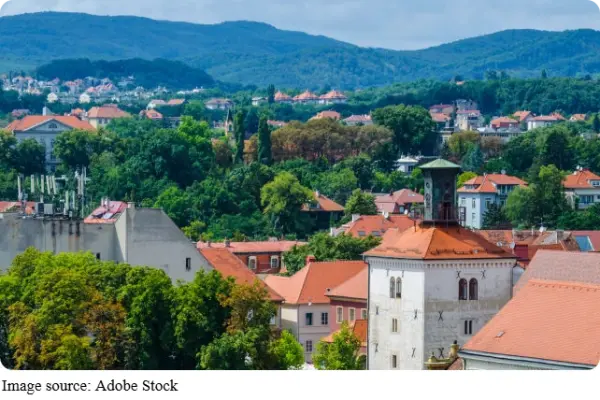
Zagreb splits into two halves that sit right next to each other: Donji Grad, the lower town with its grid of squares and museums, and Gornji Grad, the upper town on the hill above it. You can walk from one to the other in about ten minutes, which means you don't lose hours in transit. Start at Ban Jelacic Square, the main hub where the trams converge, then head up to St. Mark's building with its tiled roof showing the Croatian coat of arms. From there the Stone Gate and the Dolac market are both a short stroll away. That's a solid half day without breaking a sweat.
The market sets your morning rhythm
Dolac market sits just above the main square and it's where the city actually shops, not just where tourists take photos. Vendors sell produce under red umbrellas starting early, and the covered lower level has meat, cheese, and baked goods. Go before 9am if you want the full spread. A bag of fresh cherries or a chunk of local cheese costs a few dollars, and it makes a better breakfast than most cafes near the square. Bring cash, since plenty of stalls don't take cards.
Trams do the heavy lifting
The tram network is useful for longer journeys. A 30-minute daytime ticket bought in advance costs about $0.60. Validate it when boarding. Tram 6 connects Ban Jelačić Square with the main railway station and the central bus terminal. Trams get crowded during rush hour, while walking between the Lower Town squares is often convenient.
What to see without overloading your day
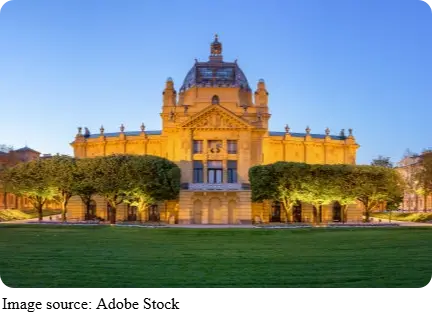
The Museum of Broken Relationships in the upper town is the one people talk about most, and it earns the attention. It's small, maybe an hour, and the personal objects on display stay with you longer than most exhibits. The Mimara Museum near the art pavilion holds a wide collection that includes works attributed to Renoir and Rembrandt, and entry is modest compared to bigger European museums. If the weather turns, the Zagreb Cathedral and the surrounding lanes give you plenty to wander without a ticket.
Costs and timing to plan around
A mid-range hotel room in the center runs roughly $90 to $140 a night, and hostels are much cheaper. For a casual vegetarian dinner, such as vegetable pizza or pasta with tomato sauce, budget around $12 to $20. Spring and early autumn are the sweet spots, with mild temperatures and fewer crowds than July and August. Advent markets draw big numbers in December, so book accommodation well ahead if you're going then.
Before you go
The airport shuttle to the central bus terminal takes approximately 30 to 40 minutes and costs about $9 one way. Croatia uses the euro now, which simplifies things if you're coming from elsewhere in the eurozone. Wear comfortable shoes, because the upper town is all cobbles and stairs. And keep some small bills on you for the market and for kiosk tram tickets.
Zagreb doesn't try to impress you in the first hour. It works on you over a couple of days, one market visit and one tram ride at a time. Give it that time and you'll wonder why you ever treated it as just a stopover.