Seoul's Old Soul

Lucas Schneider
| 23-11-2026
 · Travel team
Hey, Lykkers! Seoul has a way of sneaking up on you. One minute you're in a glass-and-steel subway station, the next you're standing in a courtyard where kings walked six hundred years ago. The city doesn't separate its past from its present—it just layers them on top of each other.
If you want to feel that history rather than just photograph it, here are five places worth your time.
Gyeongbokgung: The Big One
This is the palace everyone tells you to see, and they're right. Gyeongbokgung was the main royal residence of the Joseon Dynasty, and walking through those massive gates into the courtyards feels like stepping onto a film set—except it's real, and the mountains are right there behind the rooftops.
The throne hall, Geunjeongjeon, is the centerpiece, but don't rush past the smaller side buildings and the pond pavilions.
Admission is about US$2 for adults, and it's free if you wear a hanbok. The guard-changing ceremony at the main gate happens daily at 10 AM and 2 PM, lasts about twenty minutes, and costs nothing extra. One practical note: the palace is closed on Tuesdays. Go early if you want photos without a hundred other people in them.
Changdeokgung and the Secret Garden
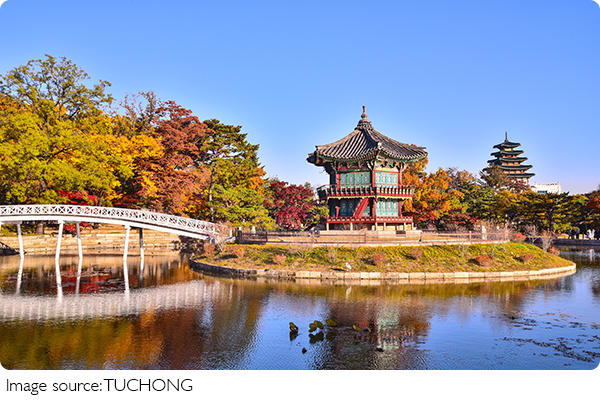
If Gyeongbokgung is the formal, symmetrical showpiece, Changdeokgung is the one that feels like it grew out of the landscape. It's a UNESCO World Heritage site, and unlike the rigid layouts of other palaces, this one was built to follow the natural contours of the hills around it. The result is something quieter and more organic.
The real draw is the Huwon, or Secret Garden, tucked behind the main buildings. It's a separate ticketed area with limited entry—about US$4 on top of the roughly US$2 palace admission—and you generally need to join a guided tour. Lotus ponds, ancient trees, and pavilions that only royalty once used. It's worth the extra planning. The palace is closed
Jongmyo Shrine: The Quiet One
Most visitors skip Jongmyo, and honestly, that's their loss. This Confucian shrine is a UNESCO site dedicated to the spirit tablets of Joseon kings and queens, and it has a stillness that the busier palaces don't. The main hall, Jeongjeon, stretches out in a long horizontal line of red pillars—it's one of the longest traditional wooden structures of its kind anywhere.
Admission is under US$1. Weekdays run on timed guided tours, while weekends allow free wandering. The spirit path—a raised stone walkway meant only for the spirits—runs alongside the visitor route, and walking beside it with a bit of respect is part of the experience. Closed Tuesdays.
Jongmyo Shrine
Deoksugung: The Night Owl
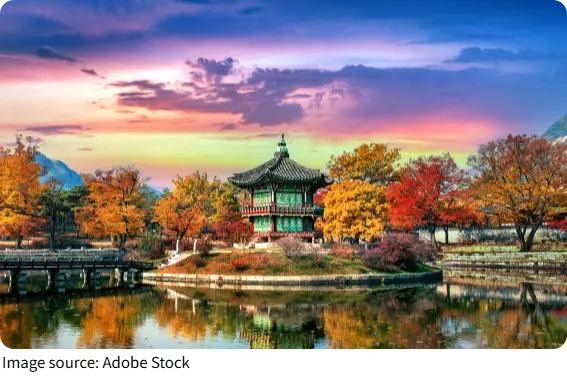
Deoksugung is the odd one out among Seoul's palaces, and that's what makes it interesting. It sits right in the middle of the City Hall area, surrounded by modern buildings, and it's the only palace open late—until 9 PM. The mix of traditional Korean halls and a Western-style stone building from the early 1900s gives it a strange, in-between feeling that suits its history.
Admission is under US$1 for adults, and there's a guard-changing ceremony three times a day at the main gate. The stone wall road outside the palace is a pleasant walk, especially in autumn. If you're in central Seoul in the evening and want something low-key, this is a good call.
Bukchon Hanok Village
This isn't a museum or a ticketed attraction—it's a real neighborhood with hundreds of traditional hanok houses, and people actually live there. The narrow lanes between Gyeongbokgung and Changdeokgung were once home to nobles and officials, and the tiled roofs and stone walls still carry that atmosphere.
Visiting the streets is free. Hanbok rentals start around US$12 for a couple of hours if you want the full experience. But here's the important bit: since March 2025, certain managed areas have a curfew from 5 PM to 10 AM, and some alleys close on Sundays. Arrive before 10 AM on a weekday for the calmest wander, and keep your voice down—this is someone's home.
Final Thoughts
Seoul's history isn't locked behind glass. It's in the stone under your feet, the painted eaves above your head, and the quiet corners where nobody's taking selfies. These five places cost almost nothing to visit—the most expensive ticket here is under US$5—and they reward you for slowing down. Pick two or three, give yourself time to sit and look, and let the city show you its age.
Top 10 UNESCO World Heritage Sites in South Korea
Video By "Globetrotter"