Chiang Mai Without the Rush

Camille Dubois
| 24-11-2026
 · Travel team
Welcome back. You could cram Chiang Mai into two days, hit the big temple on the hill, snap the photos, and leave.
Plenty of people do exactly that. But the city rewards a slower pace, and the travelers who stay four or five days tend to come back saying the same thing: the best parts were the ones they didn't plan.
Chiang Mai
Why the old city pulls you in
The historic center is enclosed by a square moat, with old brick walls, temple courtyards, and lanes that are easy to explore on foot. Wat Chedi Luang stands near the center with its massive partially ruined stupa, while Wat Phra Singh lies a short walk west and includes the decorated Lai Kham chapel. Some temple areas are free to enter, while others charge admission to particular buildings or grounds. Check the posted fees at each entrance and carry small cash denominations. Cover shoulders and knees when visiting.
The mountain temple, timed right
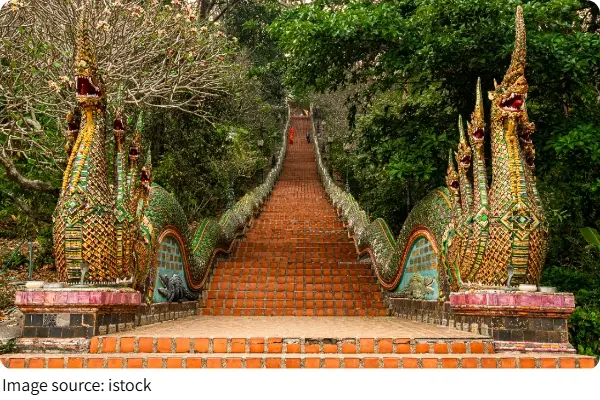
Doi Suthep is the one everyone names, and for good reason. The 306-step staircase up to the golden chedi is the ritual, though a funicular saves your legs for about 20 baht. Here's the part most people get wrong: they arrive at midday with a tour bus. Instead, go early, before 8 a.m., when the mist still sits on the valley and the monks are chanting. A red songthaew from the Chang Phuak gate area runs about 60 baht per person up the mountain, and that's your transport sorted. Nowhere else in the city gives you that view for the price of a coffee.
Sticky waterfalls and jungle air
About an hour to ninety minutes north of the city, Bua Tong earns its nickname from the textured limestone over which the water flows. Some designated sections can be climbed, but algae-covered patches and stronger currents can make parts slippery. Follow local signs, use the provided handrails or ropes where available, and respect any closures. Bring footwear suitable for water and a change of clothes. A hired songthaew or arranged excursion is a practical way to reach the falls. Scooter rentals may start around 200 baht per day, with fuel and insurance charged separately.
What a day actually costs
A basic guesthouse room with a fan can cost around 400 to 700 baht a night, while a mid-range hotel with a pool may cost roughly 1,200 to 1,800 baht. Simple market meals often start around 40 to 60 baht, with restaurant meals costing more. Vegetarian khao soi with tofu or mushrooms offers a version of the local coconut curry noodle soup. Vegetarian restaurants also offer vegetable fried rice and stir-fried vegetables. Allow roughly 60 to 120 baht for a simple vegetarian meal. A daily planning budget of around 1,500 to 2,500 baht can cover modest accommodation, meals, and local travel, with private excursions budgeted separately.
Getting around without the stress
Songthaews are the shared red trucks that travel through the city. Short shared journeys may start around 30 baht per person, but the fare depends on the route, distance, and whether the vehicle is shared or privately hired. Agree on the price before boarding. Grab also operates in Chiang Mai and displays an estimated fare before booking. Walking works well for many trips inside the moat. Scooter rental requires suitable riding experience, the correct licence, and insurance that covers your use.
When to go and what to book
November through February generally brings cooler, drier weather and higher demand for accommodation. Book ahead for December, major holidays, and festival dates. March and April are usually hotter, making early mornings more comfortable for outdoor sightseeing. The rainy season generally runs from May to October, with conditions varying from brief showers to prolonged heavy rain. Accommodation can be cheaper outside peak season, but compare actual dates rather than relying on a fixed discount.

The point of Chiang Mai isn't to tick off a list. It's to leave a morning free and see where the day takes you. Try that on your next trip, and you'll understand why people keep extending their stay by a few days.