Étretat Cliffs: Quick Guide

Darius
| 25-11-2026
 · Travel team
The Étretat cliffs look like a postcard from a distance, but the real trip is a walk you do on foot, in the wind, with chalk dust on your shoes.
Do not just snap a photo from the beach and leave. The point of coming here is the climb.
Why These Chalk Walls Stand Out
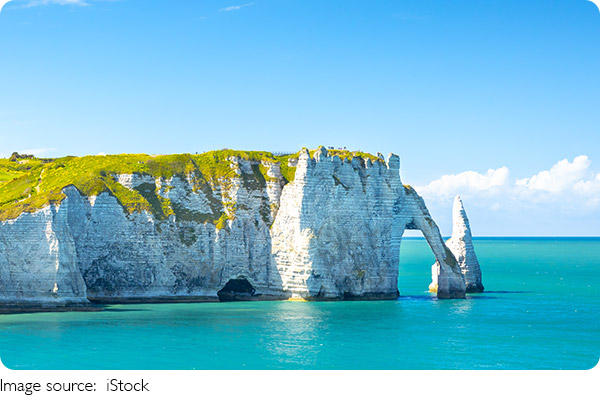
The cliffs are made of white chalk, the same soft stone that runs under the English Channel, and they rise roughly 90 meters above the water. That height is what makes the view work. The most famous arch is L'Aiguille, a needle-shaped stack that stands alone just offshore, and next to it the Porte d'Aval arch curves out over the sea. You'll see paintings of both in the town, because Claude Monet came here repeatedly in the 1880s and worked the same viewpoints you'll stand on. The Étretat garden, Les Jardins d'Étretat, sits on the cliff above the town and charges around 15 USD to enter, with sculpted hedges set against the sea behind them.
The Walk That's Actually Worth It
Start at the beach and take the path up to the Falaise d'Amont on the north side, past the small chapel. It's a short climb, maybe 15 minutes at an easy pace, and the view back toward the arches opens up as you gain height. From there you can follow the coastal path south, but check the tide tables first. The path along the top is fine, yet the beach below disappears at high tide, and the shingle gets pulled hard by the water. Wear shoes with grip. Chalk gets slippery when it's damp, and people do get too close to the edge for photos.
La Falaise d'Amont
Getting There and Parking
Étretat sits on the Normandy coast, about 30 km north of Le Havre. If you're driving from Paris, budget around 2.5 hours via the A13 motorway, and expect tolls of roughly 25 USD each way. Trains run from Paris Saint-Lazare to Le Havre, then you take a local bus or a taxi for the last stretch, which adds maybe 45 minutes. Parking in town is limited and fills fast in summer, so aim to arrive before 10 am. The main lots near the beach charge a few dollars an hour. There's no train station in Étretat itself.
Timing Your Visit Right
Summer brings crowds and long waits for parking, while spring and autumn give you the same cliffs with far more room to move. The light is best early in the morning, when the sun hits the chalk from the east, and the arches stand out sharply. Allow at least half a day, more if you want to walk both the Amont and Aval sides. A practical tip: check the tide before you set out, because the beach access changes through the day, and the shingle at the waterline is where the arches look biggest.

You don't need a ticket for the cliffs themselves, and that's part of the appeal. Bring a windproof layer even on a warm day, since the top of the cliff runs several degrees cooler than the town below. Go early, walk both sides, and give yourself time to just stand there. The view from the top is the whole reason you came.