Alps Lake Travel Guide

Elena Rossi
| 26-11-2026
 · Travel team
Hi, and thanks for joining us. You could try to see five Alpine lakes in a week, driving between them and photographing each one from a car park.
Don't. The lakes reward slow visits, and the best ones give you a full day of walking, swimming, and boat rides without ever moving your base.
Why one lake beats five
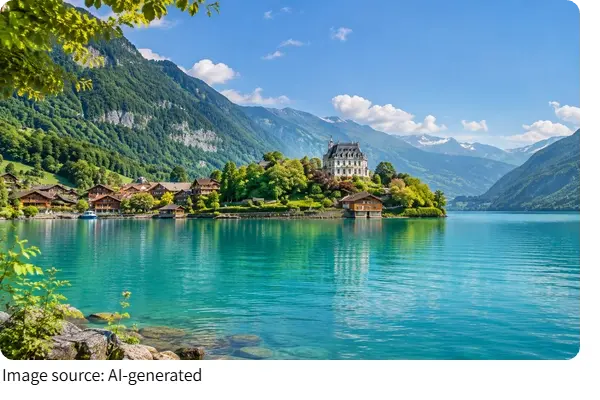
Lake Brienz in Switzerland is a good case. It sits at 564 meters above sea level, stretches about 14 kilometers, and has a color that comes from glacial rock flour suspended in the water. You notice that color properly only when you stay put and watch it change through the afternoon. Hop between lakes and you get postcard shots. Stay on one and you get the quiet hour before the tour boats start, the path along the north shore, the tiny village of Iseltwald where the pier fills up by mid morning.
Getting there without a car
Swiss rail does most of the work. Trains from Zurich reach Interlaken in under two hours, and from there the lake is a short bus or boat ride away. The Brienz Rothorn Bahn, a steam rack railway running since 1892, climbs from Brienz up to the Rothorn at 2,244 meters and costs around 96 USD for a return trip. Book it a day ahead in summer, because the early departures sell out and the afternoon clouds often swallow the view.
Lake Brienz
Where the money goes
A mid-range hotel room near Interlaken or Brienz runs roughly 150 to 220 USD a night in high season. Lake steamers on Brienz cost about 30 USD for a day pass, and a simple lunch from a bakery saves you the restaurant markup. Budget around 300 USD per person per day if you want a room with a lake view, a boat trip, and one paid mountain lift. Camping and hostel beds cut that by half.
What to actually do
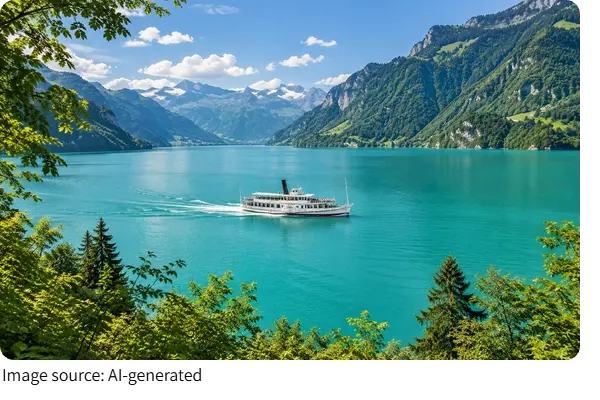
Walk the trail from Iseltwald toward Giessbach and you pass the Giessbach Falls, a series of cascades that drop around 500 meters in steps. A funicular from the lake shore takes you up to the falls in a few minutes. On the water, the old paddle steamers still run scheduled trips, and the crossing from Brienz to Interlaken takes about 75 minutes. Bring a light rain shell even in July, since afternoon showers roll in fast off the ridges.
Timing your visit
June through September gives you full boat schedules and open trails. Late September is quieter and the light is softer, though some lifts close by mid October. Avoid the first week of August if crowds bother you, since that's when European school holidays peak and the piers get busy. Check boat timetables the night before, because the shoulder-season schedule drops to a handful of daily crossings.
Small details that help
Buy a Swiss Travel Pass if you plan three or more travel days, since it covers trains, boats, and many buses. Carry cash for the smaller kiosks and mountain huts, as not all take cards. And pack a swimsuit. The lake is cold, around 19 degrees Celsius in August, but the public lidos at Brienz have wooden decks and changing rooms for a few francs.
Pick one lake, settle in for three or four nights, and let the boats and trails set your pace. You'll come home with fewer photos and better memories of the ones you took.